Eamon Blog
Today's Shelf Pull: Bob Dylan, Blonde on Blonde
Loose rhythms, long thoughts, and room for both

Bob Dylan's Blonde on Blonde gives its winding songs plenty of room without asking them to stand up straight. Read the full story from Kilmorna in Listowel.
Bob Dylan's Blonde on Blonde is a large record with very little interest in standing up straight. Its songs make room for electric rock, blues and folk without tidying away the differences. That loose fit is part of what keeps the listening lively.
On vinyl, the double album offers a useful way into that sprawl: one side at a time. There is no need to arrive with a theory about the whole thing. Follow the voice, then notice how much movement there is around it.
Released in 1966, it brings ambitious writing into arrangements that rarely seem anxious to advertise their importance. The organ swells, the guitars twang, and the rhythms leave room to breathe. Serious work can still have its collar open.
The Nashville recording setting is part of the catalogue's account, but the instruments make the more immediate introduction. Listen for the contrast between a guitar's pointed attack and the organ's sustained presence. One marks an edge; the other gives that edge somewhere to linger.
The raucous, brass-coloured opening mood gives the album a deliberately untidy welcome. It is a useful corrective to approaching Dylan as words on a page. Here the writing has company, and that company can be noisy, good-humoured and quite unwilling to stand aside.
Underneath, the relaxed rhythms do important work. They allow winding narratives to keep moving without making every turn sound like an announcement. Try following that footing rather than chasing each image. The songs remain physical things, even when the language takes a sideways step.
Dylan's voice is the point where those elements meet. The arrangements frame it without smoothing away its roughness. That matters: the humour and emotional directness would feel different in a more polished setting. A little friction keeps the writing close to speech.
The record's surreal imagery need not become homework. You can notice an odd turn, let it pass, and hear what the instruments do around it. Understanding every connection is not the admission price. Sometimes the useful discovery is simply how an image changes the mood.
Further into the album's range, the quieter, late-night moods change the scale of attention. The same broad ingredients can feel less like a gathering and more like a private thought. Listen for how organ and guitar support intimacy without needing to empty the arrangement.
The longer songs ask for patience, but not solemnity. Their winding shapes leave room for sideways humour as well as confession. An extended form can hold a change of mind, or a feeling that refuses to settle after its first appearance.
Rather than hunt for a single statement, notice the distance between the boisterous passages and the inward ones. That distance is part of the album's substance. The emotional shifts make the length useful: there is room here for more than one temperature.
The guitars are worth a separate pass. Their twanging character supplies definition alongside the organ's broader gestures, rather than merely adding force. Hearing those roles together helps explain why the music can feel unbuttoned without becoming shapeless. Relaxed is not the same thing as idle.
Across two records, stopping becomes part of listening too. A side gives you a manageable stretch in which to follow the balance of voice and instruments. The pause afterwards need not be filled with a verdict. Some records benefit from being left unresolved for a while.
For a first encounter, start with the movement rather than the reputation. Hear the rhythm beneath the language and the instruments beside the singer. The larger shape can wait until the smaller pleasures register.
For a return visit, give one familiar element less attention and another a little more. Follow the organ instead of the narrative, or the guitar instead of the voice. There is enough conversation here to change seats.
Today's Kilmorna shelf pull is Blonde on Blonde: expansive, rough-edged and capable of becoming unexpectedly intimate. Give it a side, not an examination. The words have room to wander; the music keeps them company.
On the shelf today:
Bob Dylan - Blonde on Blonde
2LP, 1966
Folk / Songwriter
EUR 33.95
Available from The Kilmorna Collection, Listowel
Buy or reserve: https://www.thekilmornacollection.com/vinyl/dylan-bob-blonde-on-blonde
Buying vinyl records in Ireland: https://www.thekilmornacollection.com/vinyl-records-ireland
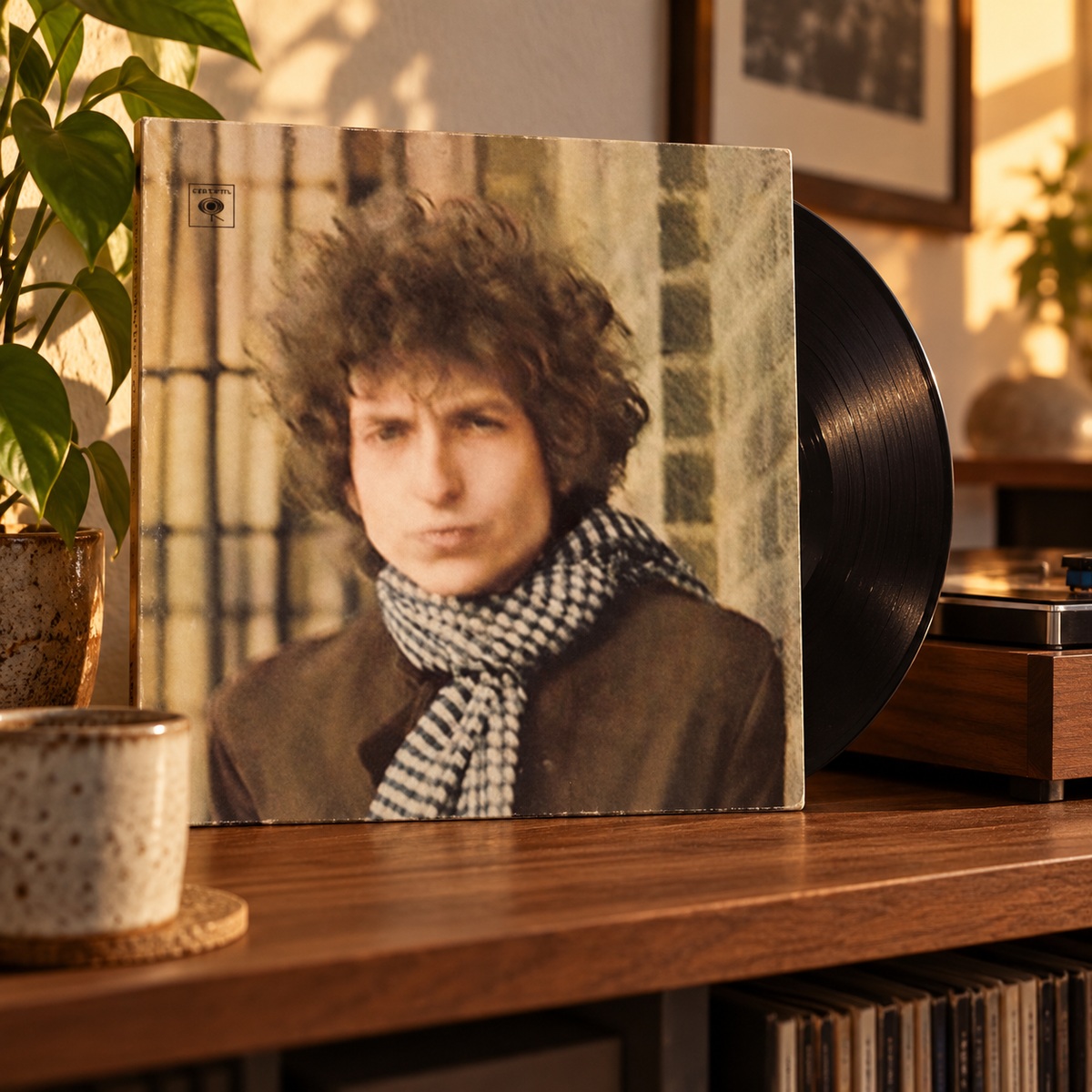
On the shelf today
Bob Dylan - Blonde on Blonde
2LP / Folk / Songwriter / 1966
EUR33.95 / Available now
Order / Reserve