Eamon Blog
Today's Shelf Pull: Korn, The Path of Totality
Heavy music with its wiring showing

Beneath the drops and digital distortion, the familiar groove and vocal tension still do their uncomfortable work.
Korn's The Path of Totality is not a record that leaves the electronics politely in the background. This 2011 album puts them inside the machinery of the songs, where they interrupt, propel and reshape the weight rather than simply give it a different finish.
Today's vinyl shelf pull at Kilmorna in Listowel is an album built around that decision. Downtuned guitars meet sub-bass drops and tightly gated rhythms, but the useful thing to notice is how the parts move together. There is friction, certainly, and also considerable agreement.
Jonathan Davis's strained melodies supply a human line through the digital movement. His rhythmic phrasing belongs inside this unsettled framework rather than floating above it. The familiar unease survives the change of surroundings, which is more interesting than a simple contest between guitars and machines.
Released on Roadrunner Records, the album brings nu metal into direct contact with bass-driven electronic production. The catalogue's genre tags also include alternative metal, electronic rock and dubstep. Those labels help locate it, but they do not quite explain the appeal: this is music in which the joins are part of the point.
The producer credits are worth reading as part of the listening, not as small print. Skrillex, Noisia, Excision and Downlink are among the collaborators here. Electronic production is a structural choice across the record, rather than an extra treatment applied after the songs were settled.
Listen for the relationship between the low guitar weight and the distorted low frequencies. They occupy related territory without doing precisely the same job. The sharply edited movement changes the way a rhythm lands, making heaviness a matter of timing as well as mass.
That is why the vocal tension matters so much. Amid drops and restless edits, the voice gives the pressure a recognisable shape. The production can alter the architecture quite drastically while leaving the emotional temperature stubbornly unchanged. Nobody has opened a window in here.
The opening stretch makes the collaborative method explicit. Chaos Lives in Everything features Skrillex, Kill Mercy Within features Noisia, and My Wall features Excision. Narcissistic Cannibal then brings Skrillex and Kill the Noise together. Read in sequence, those credits discourage the idea of one isolated electronic excursion tucked into an otherwise conventional record.
Further in, Burn the Obedient and Let's Go both feature Noisia, with Sanctuary featuring Downlink between them. That sequence offers a useful listening exercise: follow the band's recurring groove and vocal character through the changing production partnerships, rather than treating every credit as a separate attraction.
Get Up! brings Skrillex back into the track list. Alongside Chaos Lives in Everything and Narcissistic Cannibal, it provides a direct route into the album's crossover language. Listen beyond the immediate impact, though, for the way electronic movement and heavy rhythm share responsibility for momentum.
The final two listed tracks are Way Too Far, featuring 12th Planet and Flinch, and Bleeding Out, featuring Feed Me. The collaborative premise therefore reaches right through the running order. It is not a doorway the album passes through and then forgets.
Across these songs, a useful distinction emerges between electronic decoration and electronic organisation. A synthetic sound can sit on top of a riff without changing much. Here, the drops, rhythmic gates and edits participate in the arrangement itself. Following those connections is more rewarding than keeping a tally of which element seems heavier.
The black vinyl LP gives this particular shelf pull its format, not an automatic argument for better sound. The musical interest lies in the construction already described: guitar weight, vocal strain and digital distortion made to work in the same space. No special claims about the pressing are needed to make that worth considering.
The Path of Totality is most rewarding when heard as a committed arrangement experiment rather than a genre argument. Ask what each sound does to the pulse, and the record becomes less a collision than a working relationship.
For listeners drawn to Korn's groove and emotional pressure, there is a clear thread to follow. For those arriving through bass music, the producer credits offer another entrance. Neither route requires leaving the other half outside.
This is today's shelf pull because its central decision remains worth hearing closely. The electronics change the shape of the songs without removing their discomfort. A different framework, then, with the tension still firmly attached.
On the shelf today:
Korn - The Path of Totality
LP, 2011
Metal
EUR 20.50
Available from The Kilmorna Collection, Listowel
Buy or reserve: https://www.thekilmornacollection.com/vinyl/korn-the-path-of-totality
Buying vinyl records in Ireland: https://www.thekilmornacollection.com/vinyl-records-ireland
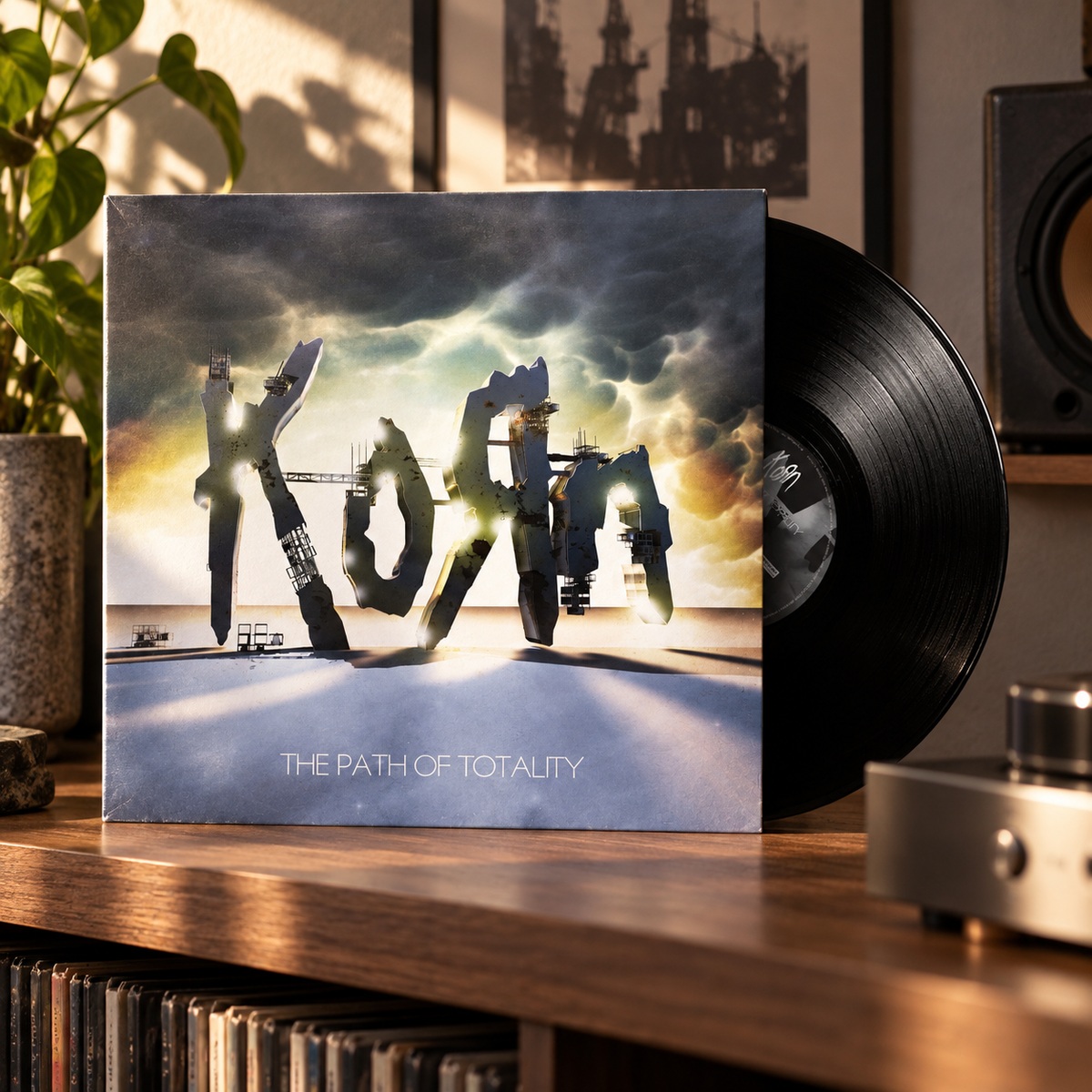
On the shelf today
Korn - The Path of Totality
LP / Metal / 2011
EUR20.50 / Available now
Order / Reserve