Eamon Blog
Today's Shelf Pull: Muse, Simulation Theory
Big choruses, electronic nerves, and room to come down

Beneath the science-fiction scenery, the useful listening thread is the movement between tension, release, and a little breathing room.
Muse do not approach Simulation Theory with a small decorating budget. Synths, programmed beats and large choruses furnish nearly every corner. Yet the interesting thing about this vinyl selection is not simply its scale, but how that scale accommodates unease.
Released in 2018, the English band's eighth studio album places rock muscle inside an electronic framework. The guitars have not been evicted. They share the space with textures that make the music feel watchful, as though something is happening just outside the frame.
For today's shelf pull in Listowel, follow the changes in pressure rather than treating the science-fiction setting as the whole story. Across eleven tracks, the record keeps finding ways to turn apprehension into a chorus you can get your arms around.
That is a useful distinction with music this theatrical. The imagery suggests distance and machinery; the melodic appeal is much more direct. You need not sign up for an imagined future to recognise the ordinary desire for something solid to hold onto.
“Algorithm” opens with an ominous pulse, establishing tension before the sequence has travelled very far. Listen to that sense of forward motion rather than waiting only for a grand arrival. The electronics supply atmosphere, but they also give the drama its footing.
“The Dark Side” carries that uneasy opening onward. By the time “Pressure” brings its harder riffing into focus, the change feels less like a switch of genre than a shift in weight. The same room suddenly contains some heavier furniture.
“Propaganda” keeps the hard edges in view, making this stretch of the first side a useful place to hear the album's balancing act. Rock and electronics are not taking polite turns. They are competing for attention within the same dramatic scheme.
The temptation is to describe all of this as futuristic and leave it there. That misses the familiar mechanics underneath: a tense passage, an expansive hook, the satisfaction of release. The setting changes those mechanics without making them unrecognisable.
Side A places “Break It To Me” between “Propaganda” and “Something Human”, with the latter closing the side. That position gives its more introspective mood particular importance. After the opening run's tension and harder edges, reflection gets the last word before the turn.
Side B begins with “Thought Contagion”, followed by “Get Up And Fight” and “Blockades”. Here, anxiety feeds choruses that reach outward rather than retreating into themselves. The invitation is collective in feeling, even when the subject matter remains suspicious of the surrounding world.
Then “Dig Down” and “The Void” bring a more reflective tone to the closing stretch. It is worth hearing them as a pair within the sequence: the record does not need to keep raising its fists to maintain a sense of consequence.
Those shifts are what make the side division worth noticing. The first side moves towards “Something Human”; the second ends at “The Void”. Both destinations complicate the idea of an album interested only in spectacle, leaving room for an inward look.
This Warner Records LP presents the standard eleven-track sequence. For listening purposes, that gives the argument a clear boundary: begin with “Algorithm”, finish with “The Void”, and notice how the meaning of the opening tension changes along the way.
The best reason to return to Simulation Theory is the friction between its electronic surfaces and its emotional directness. The machinery looks imposing, but the songs still want contact. There is something disarming about that.
It also rewards listening beyond the biggest gestures. Notice where a harder passage gives way to reflection, or where unease becomes an invitation to sing. Those transitions give the spectacle a shape rather than merely a larger footprint.
Muse leave plenty of scenery standing at the end. What stays with you, though, may be the movement from suspicion towards resolve. Under all that imagined technology, the record has recognisably human business to attend to.
On the shelf today:
Muse - Simulation Theory
LP, 2018
Rock
EUR 26.95
Available from The Kilmorna Collection, Listowel
Buy or reserve: https://www.thekilmornacollection.com/vinyl/muse-simulation-theory
Buying vinyl records in Ireland: https://www.thekilmornacollection.com/vinyl-records-ireland
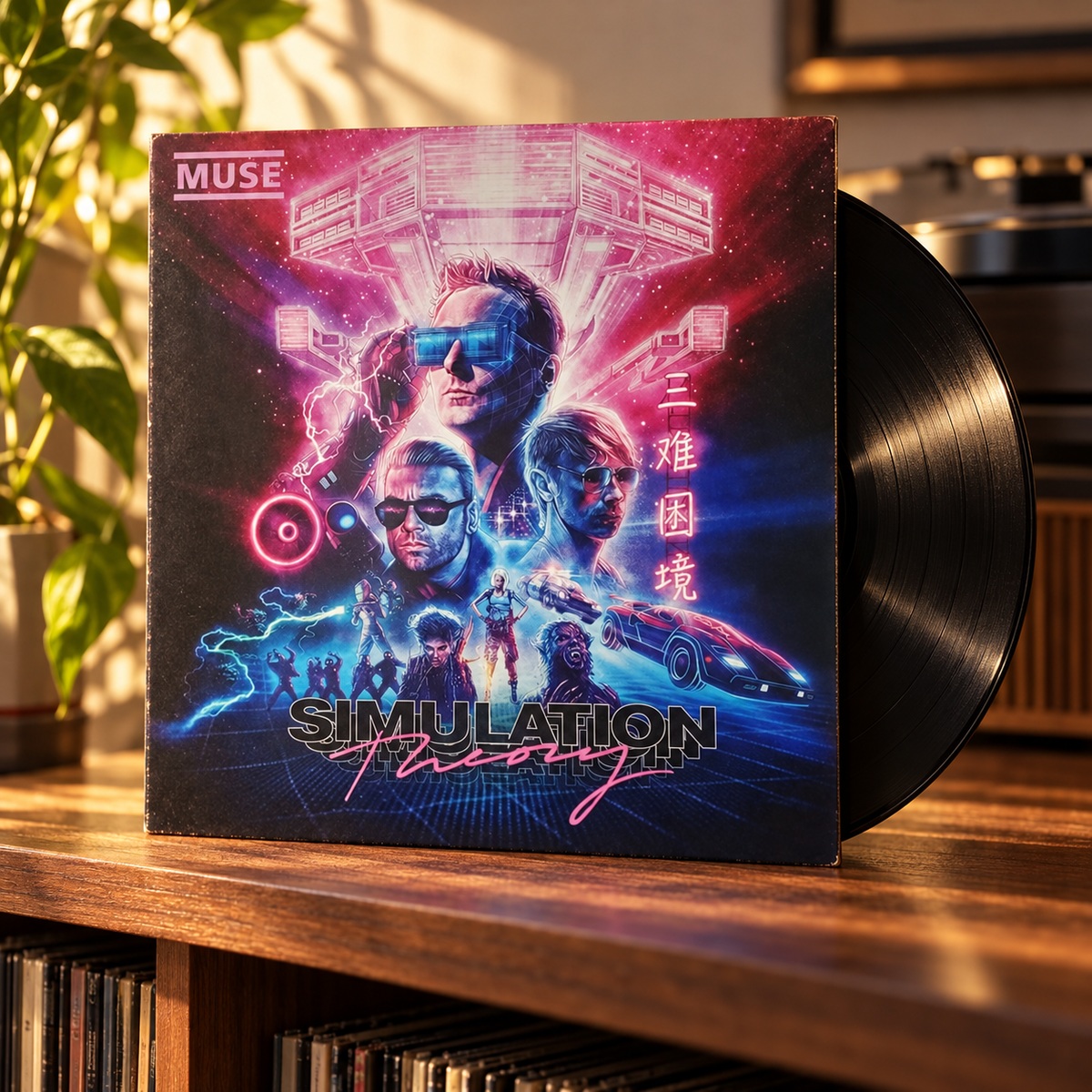
On the shelf today
Muse - Simulation Theory
LP / Rock / 2018
EUR26.95 / Available now
Order / Reserve