Eamon Blog
Today's Shelf Pull: Neil Young, Silver & Gold
Quiet songs with room to look back

Neil Young keeps the arrangements spare on Silver & Gold, leaving guitar, voice and the shape of each song to do the work.
Neil Young makes a modest entrance on Silver & Gold. Guitar and voice establish the scale before anything needs explaining. This is music that asks for attention without making a ceremony of it, a useful distinction when a quiet record could so easily become solemn.
Released in 2000, the album brings together ten songs written across a broad stretch of his career. On vinyl, those songs divide into two sets of five. The arrangement gives this reflective collection a practical shape: a pause, then another approach.
Good To See You and Silver & Gold open the first side with gently picked guitars and an easy vocal manner. Listen to how little separates the singing from ordinary conversation. The melodies carry feeling without insisting that every moment become an occasion.
The accompaniment stays light enough for the guitar and voice to remain the centre of attention. Rather than waiting for the arrangements to grow, try following the melodic turns. Small changes have somewhere to register when there is not much furniture in the room.
Recorded in the late 1990s, Silver & Gold looks back without arranging everything into a grand retrospective. The songs have different histories, but the restrained setting gives them common ground. You hear a collection taking its time rather than a career being tidied into chapters.
Daddy Went Walkin' sits between the title song and Buffalo Springfield Again. That sequence matters: the first side does not leave reflection to one designated track. Personal history and musical memory belong to the same conversation, with no need for a formal introduction between them.
Buffalo Springfield Again turns towards Young's former band, making the backward glance explicit. Its wistfulness fits the surrounding songs rather than interrupting them. Listen for that continuity of mood: a recognisable piece of history is allowed to remain a song, not become a commemorative plaque.
The Great Divide closes side A at 4:32, the longest song on that side. Its searching character gives the first half an unsettled edge. Reflection here does not necessarily supply an answer, which is part of what keeps the record from feeling too neatly resolved.
Side B begins with Horseshoe Man, followed by Red Sun and Distant Camera. Red Sun is the shortest of those three, at 2:46. Its tenderness offers a compact point of attention within a side that will later make considerably more room for a single song.
That song is Razor Love, which runs to 6:29, the longest duration in the ten-track sequence. The contrast is worth noticing before listening. In a collection largely built from shorter pieces, simply allowing one song more time changes the proportions of the whole side.
Without Rings follows at 3:42 and ends the album. Rather than treating Razor Love as the final destination, the sequence leaves another song beyond it. Give that last position its due: the record has not finished speaking just because its longest stretch is over.
There is a useful difference between sparse music and music that feels unfinished. Here, the light accompaniment keeps directing attention back to the writing. Guitar figures, vocal phrasing and melody are not preliminary sketches waiting for a larger arrangement to arrive.
For a Listowel shelf pull, the appeal is straightforward: this is an album to follow across both sides. Choosing a first song is easy enough, but hearing the shorter pieces beside the longer ones reveals something that a single selection cannot show.
Silver & Gold rewards attention to proportion rather than spectacle. The voice stays central, the guitars keep the conversation moving, and the sequence gives reflection several different lengths. Quietness is the working method, not the whole subject.
If you tend towards Young's acoustic songwriting, there is a clear route into this record. Start with the opening pair, then keep going. The later songs deserve more than being treated as evidence for an impression already formed.
The lasting invitation is to listen without demanding a dramatic turn. These ten songs offer space for memory, affection and uncertainty. Sometimes a record earns another play by leaving enough room for you to return.
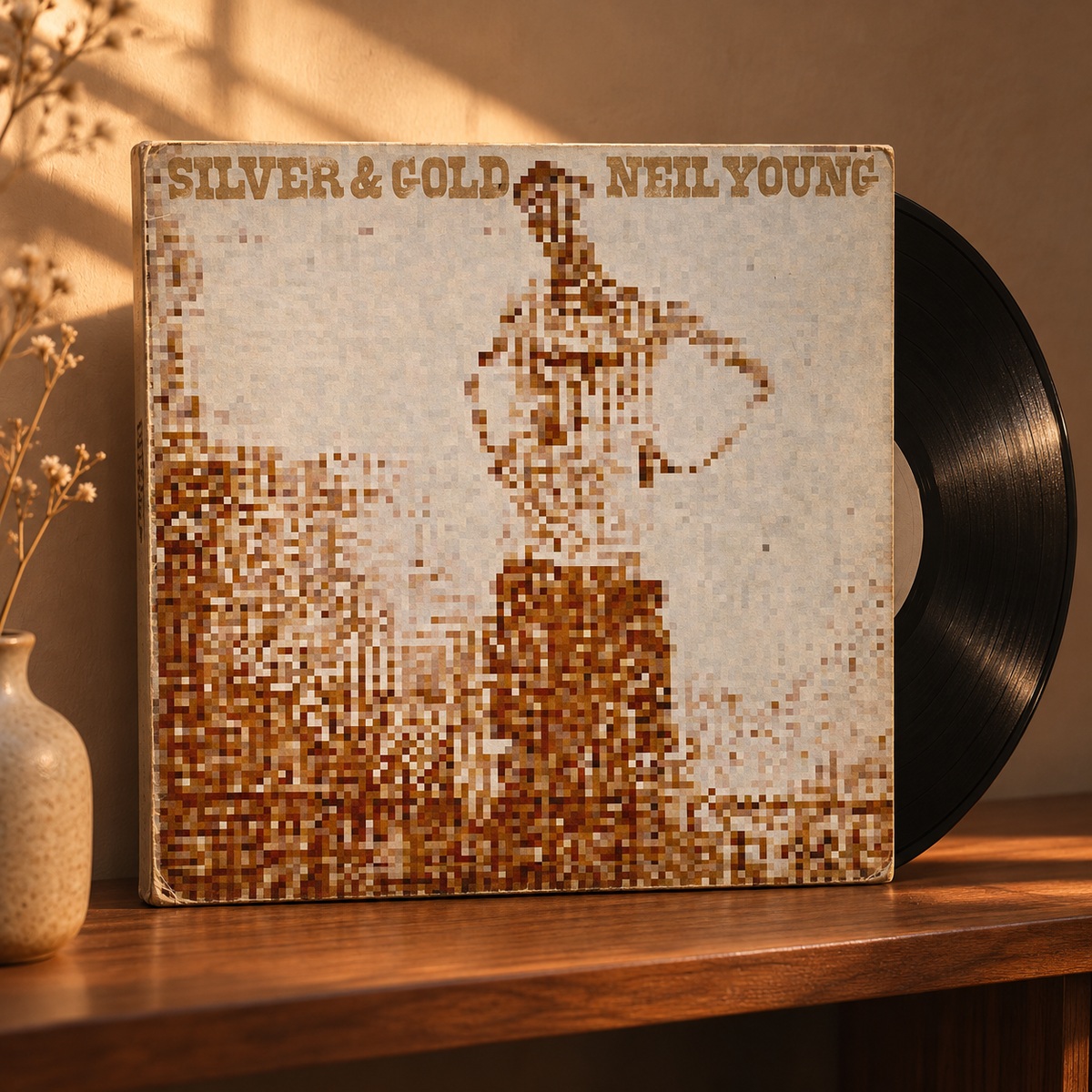
On the shelf today:
Neil Young - Silver & Gold
LP, 2000
Folk / Songwriter
EUR 23.95
Available from The Kilmorna Collection, Listowel
Buy or reserve: https://www.thekilmornacollection.com/vinyl/neil-young-silver-and-gold
Buying vinyl records in Ireland: https://www.thekilmornacollection.com/vinyl-records-ireland
On the shelf today
Neil Young - Silver & Gold
LP / Folk / Songwriter / 2000
EUR23.95 / Available now
Order / Reserve