Vinyl Record
Bob Marley & The Wailers - Natty Dread
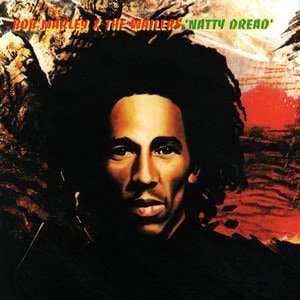
Roots reggae with lean bass, firm drums, Hammond colour, hand percussion and close backing vocals. Available from Kilmorna in Listowel.
LP · 1974
Sold out at Kilmorna Collection, retained online as part of the catalogue archive.
Natty Dread is the Bob Marley & The Wailers album where a new configuration becomes a commanding force. Released in 1974 after Peter Tosh and Bunny Wailer had left the original trio, the record introduces a different balance around Marley: the Barrett brothers' rhythm section, the I-Threes on backing vocals, and a band sound that is lean, devotional and politically alive. "Lively Up Yourself" starts with buoyant movement, but the album quickly reveals a tougher centre. "Them Belly Full (But We Hungry)" frames hunger as social pressure, "Rebel Music (3 O'Clock Roadblock)" turns surveillance into rhythm, and the studio "No Woman, No Cry" carries a lighter, more intimate feel than the later live version that became famous worldwide. Natty Dread is often heard through the shadow of what came next, but on its own terms it is a crucial studio record: focused, warm, militant and full of small arrangement details that show Marley's writing becoming more direct without losing spiritual resonance.
Natty Dread matters because it marks the first full album phase of Bob Marley & The Wailers after the original Wailers trio changed shape. The record strengthens Marley's role as leader while expanding the sound through the I-Threes and a disciplined band framework. It also contains the studio origin of "No Woman, No Cry", making it essential for understanding how a song of comfort later became a global live anthem.
For collectors, Natty Dread is the album to own when the Marley shelf needs the bridge between the original Wailers era and the international breakthrough that followed. It is tighter than Catch A Fire, less universally familiar than Exodus, and rich with the political and spiritual language that defined Marley's mid-1970s work. It rewards close listening because the groove is never merely decorative; every bass movement, organ phrase and backing vocal feels tied to the message.
Roots reggae with lean bass, firm drums, Hammond colour, hand percussion and close backing vocals. The studio sound is warm but controlled, with political urgency held inside steady grooves. Marley's voice sits direct and human, moving between exhortation, comfort and warning.
Recommended for: Bob Marley collectors focused on the mid-1970s peak; roots reggae listeners who want political and spiritual weight; collections built around essential Wailers albums.
What year is Natty Dread? Use 1974. It is a key mid-1970s Bob Marley & The Wailers studio album. Is "No Woman, No Cry" on Natty Dread? Yes. The album includes the studio version; the later live version from the Lyceum became the more widely known recording. Why does Natty Dread matter in the Marley catalogue? It documents the post-original-trio Wailers lineup becoming a powerful studio band around Marley's increasingly direct songwriting.