Vinyl Record
David Bowie - Pinups
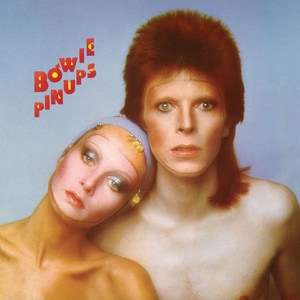
David Bowie - Pinups on LP vinyl, released in 1973. Check price, stock, collection and delivery from Kilmorna in Listowel.
LP · 1973
Available from Kilmorna Collection in Listowel.
Buyer notes: 1973 LP, currently available from the Kilmorna Collection vinyl shelf. Pay for pickup in Listowel, ship within Ireland from EUR 5.95 per record or outside Ireland from EUR 12.00 per record.
Pinups is David Bowie looking backward while still moving at dangerous speed. Released in 1973, between Aladdin Sane and Diamond Dogs, it gathers songs associated with the London and British beat groups that had helped form his teenage imagination: The Yardbirds, The Kinks, Pink Floyd, The Pretty Things, The Who, Them, The Easybeats and others. On paper it is a covers album, but in practice it is a Bowie record about influence, memory and control. He is not trying to disappear inside these songs. He drags them into the heat of the Ziggy aftermath, dressing 1960s club energy in a sharper, louder, more mannered 1970s skin. That placement is crucial. Pinups arrived after Bowie had become a star and after the retirement of Ziggy Stardust as a stage identity. Instead of following that moment with another grand self-invention, he made a record of other people's songs and turned it into a map of where his own imagination had learned to spark. The performances are theatrical, sometimes brash, sometimes affectionate, and often more revealing than a polite tribute would have been. Sorrow gives the album its most elegant pop moment, while See Emily Play, I Wish You Would and I Can't Explain show Bowie treating familiar material as fuel for a new persona rather than museum pieces. The album has always had an unusual position in his 1970s run. It is not as conceptually radical as Ziggy Stardust or Low, and it does not pretend to be. Its value is in hearing Bowie expose his roots while also refusing to be ruled by them. Pinups is about taste as identity: the songs he loved, the scene he remembered, and the way a performer at the height of fame could use homage as another kind of mask.
Pinups matters because it documents Bowie's relationship with the 1960s music culture that preceded his breakthrough. Rather than treating influence as something hidden behind originality, he places it in the foreground and performs it with full post-Ziggy confidence. It also complicates the idea of a covers album: this is not merely a set of borrowed songs, but a statement about how Bowie absorbed, reshaped and theatricalised the sounds that made him possible.
For collectors, Pinups is the album that explains some of Bowie's vocabulary from the inside. It belongs near Aladdin Sane and Diamond Dogs because it captures the short, unstable interval when he was closing one identity and preparing the next. It is especially rewarding for listeners who enjoy tracing lines between British beat, mod, early psychedelia, glam rock and the Bowie performance style that could turn memory into theatre.
Glam-era cover versions with sharp guitars, bright vocal exaggeration, beat-group momentum and a theatrical 1973 sheen that makes 1960s material sound restless rather than nostalgic.
Recommended for: David Bowie collectors filling the key 1970s studio run; listeners interested in British beat and mod songs reframed through glam rock; fans who enjoy covers albums with a strong performer identity.
What year is Pinups from? Pinups was originally released in 1973, during Bowie's intense early-1970s run after Aladdin Sane and before Diamond Dogs. Is Pinups made up entirely of covers? Yes. The album is Bowie's tribute to songs and groups from the 1960s scene that shaped his musical imagination. Why should a Bowie collector own Pinups? It reveals the influences Bowie chose to foreground at a major career moment, and it adds context to the glam vocabulary around his post-Ziggy period.