Vinyl Record
Cowboy Junkies - One Soul Now
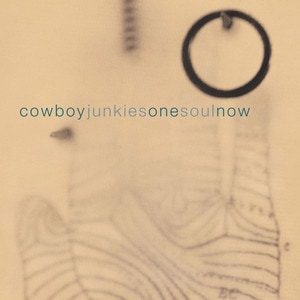
Cowboy Junkies - One Soul Now on LP vinyl. A 2004 record available from Kilmorna Collection in Listowel, Ireland.
LP · Rock · 2004
Available from Kilmorna Collection in Listowel.
Buyer notes: 2004 LP, currently available from the Kilmorna Collection Rock shelf. Pay for pickup in Listowel, ship within Ireland from EUR 5.95 per record or outside Ireland from EUR 12.00 per record.
One Soul Now is Cowboy Junkies working in the long afterglow of their reputation without trying to repeat the exact spell that made that reputation. Released in 2004, the album belongs to a period when the Toronto band had already proved that quiet could be radical. The Trinity Session had made space, breath and atmosphere central to their identity, while the 1990s albums tested how far that language could stretch into rock, country, blues and literary folk. One Soul Now arrives later, steadier and more inward, with a title that gestures toward connection rather than isolation. It is not a retreat from the world. It is a record about how people remain bound to one another even when the music sounds private, slow moving and weathered. The core Cowboy Junkies chemistry is intact: Margo Timmins at the emotional centre, Michael Timmins shaping the songs and guitar language, Alan Anton giving the low end its calm gravity, and Peter Timmins keeping time without crowding the room. What distinguishes One Soul Now is the sense of a band trusting its own pace. The title track opens the album with a pulse that feels lived in rather than announced. Why This One? and My Wild Child keep the writing close to human scale, less interested in dramatic statements than in the small turns where devotion, uncertainty and memory become difficult to separate. From Hunting Ground to City and The Stars of Our Stars widen the landscape, but the band never mistakes size for volume. Their drama comes from patience. The album also matters because it catches the group in a self-sufficient mode. Cowboy Junkies had long been associated with a sound that seemed naturally intimate, yet One Soul Now makes that intimacy feel like a deliberate working method. The arrangements often leave generous space around the voice, allowing guitars, bass, percussion and keyboard colours to move like weather instead of decoration. Notes Falling Slow, later important enough to lend its name to the band's retrospective project, carries the kind of suspended ache that few groups can make feel unforced. No Long Journey Home and He Will Call You Baby deepen the record's late-night pull, while Simon Keeper and The Slide let the album end with a mood closer to acceptance than resolution. Because Cowboy Junkies are often remembered through one landmark recording, One Soul Now rewards listeners who want the longer story. It shows a mature band not chasing reinvention for its own sake, but also refusing to flatten itself into nostalgia. The songs have the dusk-lit spaciousness that longtime listeners expect, yet the emotional temperature is different from their earliest work. There is more middle-distance reflection here: the feeling of people looking back, looking across a room, or looking at a relationship after the first heat has passed. The result is not chilly. It is generous, adult and careful in the best sense, a record that lets each line hang long enough for the listener to hear what has been left unsaid. One Soul Now is easy to underrate if the only measure is instant recognition. It does not force a signature hit into view. Its strength is cumulative: the repeated low-lit textures, the way Margo Timmins can make a phrase sound both guarded and exposed, the way Michael Timmins writes songs that avoid melodrama while still carrying consequence. For vinyl listeners, that makes the album especially natural as a full-side experience. It asks for attention rather than interruption, and it returns that attention with a kind of slow emotional alignment. Within the Cowboy Junkies catalogue, it stands as a mature chapter about communal feeling, private doubt and the beauty of a band that knows exactly how much not to add. The album's quiet confidence also helps separate it from the easy shorthand often attached to the group. Cowboy Junkies are not merely whispering because whispering is pretty; they are controlling the room so that hesitation, regret and tenderness become audible. One Soul Now turns modest tempos into narrative time. The listener can hear the band measuring distance between people, between past and present, between spiritual longing and everyday fatigue. That measured quality makes the record durable. It does not burn itself out on first contact. It waits, gathers and slowly becomes personal.
One Soul Now matters because it argues for Cowboy Junkies as a long-form band rather than a group frozen around one famous origin story. By 2004, they had moved through major-label attention, independent endurance and years of touring, yet the album sounds neither defensive nor nostalgic. It presents their core virtues - atmosphere, restraint, literary songwriting and Margo Timmins' unmistakable vocal presence - as tools for adult reflection rather than stylistic trademarks. The record also helps explain why the band has lasted. Their music is often described as quiet, but One Soul Now shows how active that quietness can be: guitars hover, rhythms breathe, and songs gather meaning through repetition and restraint. It belongs with the early-2000s work of artists who were stepping away from industry spectacle and back toward rooms, players and durable songs. For collectors, that makes it a valuable later chapter from a band whose catalogue is deeper than the familiar entry points. It also matters because the album refuses the easy drama of comeback or reinvention. Cowboy Junkies simply keep refining a language that depends on trust: trust in Margo Timmins' ability to hold a line without over-singing it, trust in Michael Timmins' patient writing, and trust in a band dynamic where space can be as expressive as volume. That steadiness gives One Soul Now a particular place among mature catalogue albums. It is proof that longevity can produce intimacy rather than routine.
For a Cowboy Junkies shelf, One Soul Now is the kind of album that deepens the portrait rather than merely filling a gap. It is not the first recommendation for someone who has never heard the band, but it becomes important once the listener understands their gift for slow tension and emotional atmosphere. The record shows what happens after the breakthrough narrative fades and a band is left with craft, trust and a shared internal language. It pairs naturally with The Trinity Session, Black Eyed Man, Lay It Down and Open, because it draws from all of those instincts without copying any single moment. Collectors who value continuity will hear a group still committed to mood and song architecture, while listeners who prefer late-night folk-rock, alt-country and restrained guitar music get an album that grows with repeated play. Its appeal is not rarity mythology; it is catalogue depth, maturity and a quietly strong set of songs. It is also a smart choice for collections that make room for artists beyond their best-known titles. One Soul Now rewards the kind of listener who plays records in seasons: during late evenings, long interiors, winter travel or solitary reading. The album does not demand centre-stage treatment, yet it changes the atmosphere of a room when given space. That is a collector virtue too, especially for shelves built around repeat listening rather than only historical milestones.
Slow-burning alt-country and folk-rock with hushed vocals, spacious guitars, patient rhythm work and a dusk-lit emotional tone that favours restraint over release.
Recommended for: Cowboy Junkies listeners exploring beyond the early landmarks; Collectors drawn to quiet alt-country and literary folk-rock; Late-night listeners who want atmosphere, patience and emotional detail.
What year is One Soul Now from? One Soul Now is a 2004 Cowboy Junkies album, part of the band's mature post-1990s catalogue. Is One Soul Now a good entry point for Cowboy Junkies? It can work for listeners who already like slow, atmospheric folk-rock, though many people begin with The Trinity Session before moving into later albums like this one. What makes the album stand out? Its strength is the band's controlled intimacy: Margo Timmins' voice, Michael Timmins' patient songwriting and arrangements that let small details carry emotional pressure.