Vinyl Record
Cradle of Filth - Cruelty and the Beast
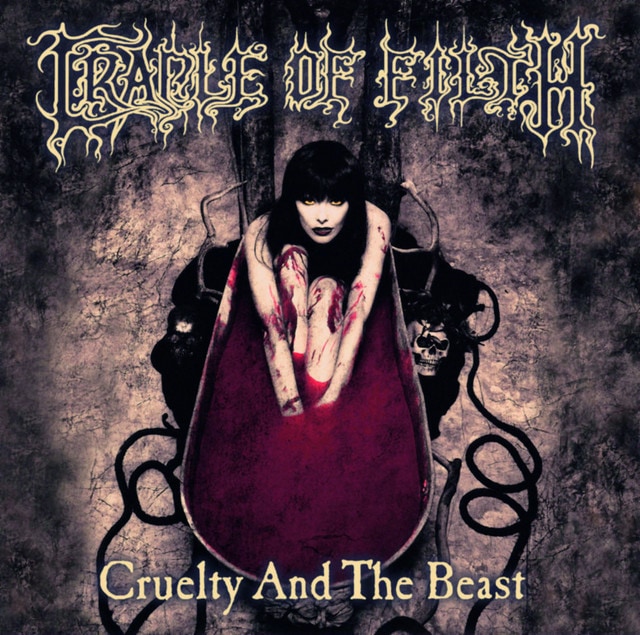
Cradle of Filth - Cruelty and the Beast on LP vinyl. A 1998 Metal record available from Kilmorna Collection in Listowel, Ireland.
LP · Metal · 1998
Available from Kilmorna Collection in Listowel.
Buyer notes: 1998 LP, currently available from the Kilmorna Collection Metal shelf. Pay for pickup in Listowel, ship within Ireland from EUR 5.95 per record or outside Ireland from EUR 12.00 per record.
Cruelty and the Beast is Cradle of Filth turning gothic excess into a full album-length theatre of blood, history and grandly staged horror. Released in 1998, it follows Dusk and Her Embrace and pushes the band further into a world where extreme metal, vampiric melodrama, literary imagery and symphonic staging are inseparable. The album is built around Elizabeth Bathory, the Hungarian countess whose legend had already become a dark magnet for horror culture and metal mythology. Cradle of Filth do not treat that subject as a loose mood board. They build a sequence of scenes, voices and violent transformations, with Dani Filth's writing and performance treating the story as feverish drama rather than simple biography. The opening pieces make the album's intention clear. Once Upon Atrocity does not behave like a conventional metal introduction; it is a threshold. Thirteen Autumns and a Widow then drops the listener into the band's maximal language: fast guitars, ornate keyboards, sudden shifts in tempo, theatrical vocals and a sense that every passage is lit by torchlight. Cruelty Brought Thee Orchids remains one of the album's defining statements because it balances speed and ornament with a chorus that feels almost decadent in its shape. Beneath the Howling Stars expands the setting, while Venus in Fear and Desire in Violent Overture keep the record moving through implication, ritual and escalation. What separates Cruelty and the Beast from many extreme-metal concept records is its confidence in voice. Dani Filth's shrieks, snarls and spoken passages are not simply there to signal aggression; they act as characters, textures and narrative pressure. The participation of Ingrid Pitt, whose horror-film history gave the Bathory material an extra theatrical charge, links the album to gothic cinema as much as to black metal and death metal. That link matters. Cradle of Filth were never only an underground metal band with fast drums and ornate guitars. They were building a recognisable world of velvet darkness, blasphemous pageantry and British horror sensibility, and Cruelty and the Beast is one of the clearest examples of that world becoming album architecture. The record is also a key document of the band's late-1990s ascent. By this point, Cradle of Filth had become one of the few extreme metal acts capable of attracting listeners far beyond narrow genre borders without sanding down the theatrical ugliness that made them distinctive. Cruelty and the Beast helped define that paradox. It is abrasive, crowded and deliberately excessive, yet it is also melodic, memorable and unusually story-driven. The Twisted Nails of Faith and the long Bathory Aria show the ambition most clearly: songs are not just riffs in sequence, but chambers within a larger gothic structure. Portrait of the Dead Countess and Lustmord and Wargasm close the album with the sense of a cursed pageant reaching its final blaze. For some listeners, the record's original reputation has been tangled with discussion of its sound and later revisiting, but the historical album remains important because of what it attempted and how completely it committed. It captures Cradle of Filth when their blend of extremity and theatre still felt dangerous, strange and oddly literary. Its violence is stylised, its romance is rotten, and its metal language is crowded with keyboards, blast-beat force, guitar attack and baroque horror. That combination could have collapsed into parody in less committed hands. Here, it becomes one of the band's defining chapters, a record that made gothic black metal feel like a stage production performed at unsafe speed under a painted moon. The album is also a study in commitment to tone. Every title, transition and vocal change serves the same fevered design, so the listener is not merely hearing songs about a legend but moving through a cursed sequence of rooms. That is why the record continues to hold attention even for listeners who know its era well. It is not tasteful and never wants to be. Its power comes from conviction: a band embracing excess, literature, horror and speed until the whole thing becomes a single elaborate nightmare.
Cruelty and the Beast matters because it fixed Cradle of Filth's identity at a crucial point: not merely as an extreme metal group, but as builders of elaborate gothic narrative. The album's Bathory concept gave the band a historical-horror framework large enough for their most recognisable traits - speed, keyboards, shrieking vocals, decadent language and theatrical staging - to feel connected rather than scattered. It also represents a late-1990s moment when underground metal was finding new ways to cross into wider awareness without becoming radio-friendly. Cradle of Filth did it through image, story and spectacle, not through simplification. The result remains important for listeners tracing symphonic black metal, gothic metal and extreme metal's relationship with horror cinema. Even listeners who prefer the band's other albums tend to recognise this one as a bold, defining act of world-building. The record's importance also lies in how fully it links metal to older gothic entertainment traditions. Hammer-style horror, theatrical narration, Elizabethan and Victorian echoes, vampiric romance and blast-beat aggression all feed the same atmosphere. That combination helped make Cradle of Filth legible to fans who might not have followed underground black metal closely, while still preserving an abrasive core. It is a reminder that extremity can be narrative, visual and literary as well as sonic. That breadth is why the album still feels singular within the band's classic run.
For a Cradle of Filth collection, Cruelty and the Beast is essential because it captures the band at maximum gothic ambition. Dusk and Her Embrace may be the earlier breakthrough for many fans, and Midian became another major gateway, but this album is the one where the band's obsession with history, myth, violence and theatrical excess becomes a complete concept cycle. Collectors should value it for the album rather than for unverified edition detail. Its importance comes from the 1998 work: the Bathory narrative, the Ingrid Pitt connection, the elaborate song structures and the band's ability to make extreme metal feel like gothic theatre. It belongs beside key late-1990s extreme-metal titles that expanded the form through atmosphere and presentation. For fans of dark, story-led records, it remains one of Cradle of Filth's most vivid statements. It is also a record that gives a collection narrative contrast. Placed beside more austere black metal or more direct death metal, Cruelty and the Beast shows the flamboyant side of extremity: the costumes, voices, melodrama and literary ambition that made the band divisive and unforgettable. That divisiveness is part of the appeal. A serious metal shelf benefits from records that changed the conversation, not only records that fit neatly inside one style boundary. It is a conversation piece because the music is so completely committed.
Ornate gothic extreme metal with blast-beat momentum, symphonic keyboards, theatrical vocals, horror narration and a blood-dark narrative atmosphere.
Recommended for: Cradle of Filth collectors focusing on the classic 1990s run; Listeners drawn to gothic horror concepts in extreme metal; Fans of symphonic black metal with theatrical narrative scale.
What year should Cruelty and the Beast be filed under? Use 1998 for the album history. Later editions revisit the material, but the original album belongs to Cradle of Filth's 1998 catalogue. What is the album about? It is a concept album built around the legend of Elizabeth Bathory, shaped through gothic horror, extreme metal and theatrical narration. Why is it important in Cradle of Filth's discography? It is one of the clearest examples of the band joining extreme metal force with elaborate gothic storytelling, making it a defining release from their 1990s period.