Vinyl Record
Creedence Clearwater Revival - Chronicle: The 20 Greatest Hits
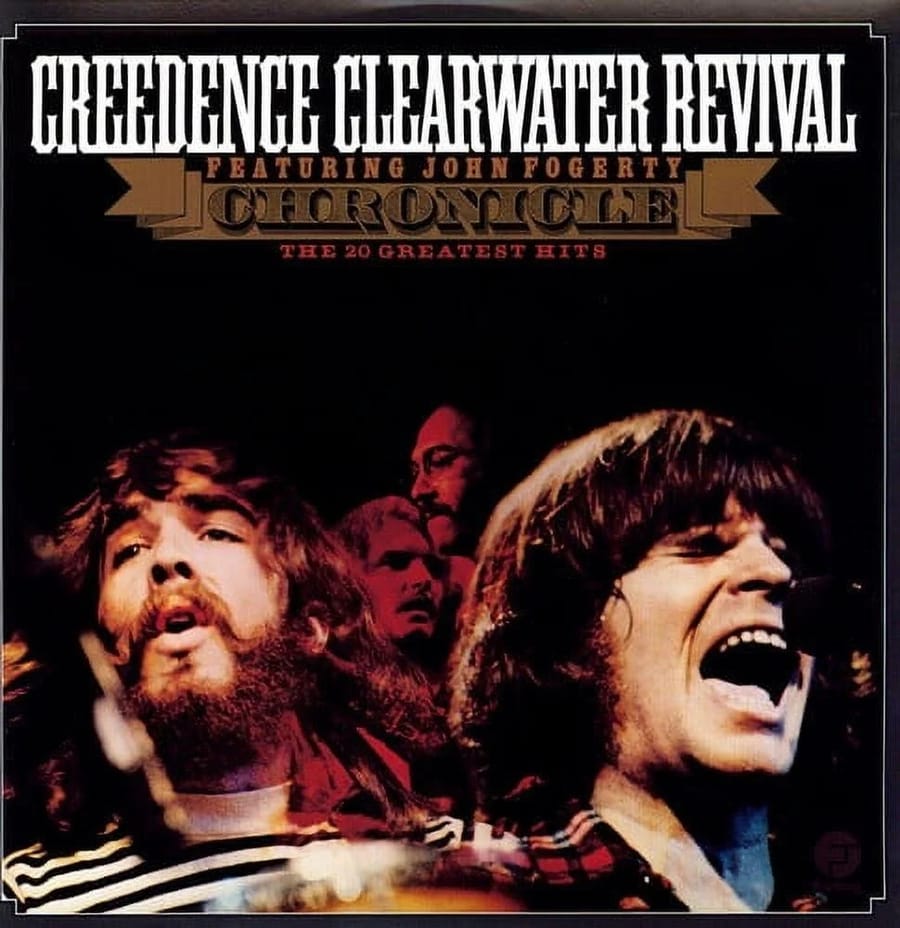
Creedence Clearwater Revival - Chronicle: The 20 Greatest Hits on 2LP vinyl. A 1976 record available from Kilmorna Collection in Listowel, Ireland.
2LP · 1976
Available from Kilmorna Collection in Listowel.
Buyer notes: 1976 2LP, currently available from the Kilmorna Collection vinyl shelf. Pay for pickup in Listowel, ship within Ireland from EUR 5.95 per record or outside Ireland from EUR 12.00 per record.
Chronicle: The 20 Greatest Hits is the rare compilation that feels less like a shortcut and more like a complete argument. Released in 1976, after Creedence Clearwater Revival had already burned through one of rock's most concentrated creative runs, it gathers the songs that made the band seem almost impossibly efficient between 1968 and 1972. Most greatest-hits albums are useful because they reduce a career. Chronicle is powerful because CCR's career was already built around singles with album-level authority. Proud Mary, Bad Moon Rising, Green River, Down on the Corner, Fortunate Son, Travelin' Band, Up Around the Bend, Who'll Stop the Rain, Have You Ever Seen the Rain and the rest do not feel like fragments. They feel like chapters from one hard-driving American songbook. The compilation makes the band's paradox obvious. Creedence sounded rooted in bayous, riverboats, roadhouses, country blues and Southern weather, yet the musicians came from El Cerrito, California. That distance might have made the project feel artificial. Instead, John Fogerty's writing and voice turned imagined geography into a moral and musical language. The songs are not documentary folk. They are compressed myths about work, escape, dread, war, dancing, rain, class resentment and American unease. The rhythm section of Stu Cook and Doug Clifford keeps the music direct and physical, while Tom Fogerty's rhythm guitar helps lock the songs into shapes that feel older than the recordings themselves. The band rarely wastes a bar. Chronicle also reveals how little ornament CCR needed. Many late-1960s and early-1970s rock bands expanded through long solos, studio experiments or conceptual scale. Creedence often did the opposite. They made songs that started quickly, stated their case and left before the listener could doubt them. Bad Moon Rising wraps apocalyptic anxiety in bright motion. Fortunate Son is a class indictment delivered with no excess language. Who'll Stop the Rain turns public disillusion into a question that still feels open. Have You Ever Seen the Rain makes melancholy singable. Even when the group stretches out with I Heard It Through the Grapevine, the groove feels plainspoken rather than indulgent. Because the original studio albums are essential in their own ways, a compilation could have seemed secondary. Chronicle avoids that problem by demonstrating the scale of CCR's singles achievement. Heard in sequence, the songs show a band that understood radio without sounding domesticated by it. They could write hooks strong enough for mass repetition, but the records retain grit, urgency and a lean band sound. The compilation's endurance comes from that balance. It works for the first-time listener, the car stereo, the party, the serious rock shelf and the collector who already owns the albums but wants the concentrated hit sequence. Few compilations earn all those roles without feeling diluted. For vinyl listeners, Chronicle is also a reminder that accessibility and depth are not enemies. These are songs almost everyone recognises, but familiarity has not made them thin. Their compactness is the craft. Their directness is the drama. The collection captures a band that managed to be populist, angry, danceable, ominous and timeless within the same short catalogue window. It is not a substitute for Green River, Willy and the Poor Boys or Cosmo's Factory, but it is one of the strongest ways to understand why Creedence became a permanent part of rock memory. Chronicle does what its title promises: it turns a rush of hits into a historical record of American roots-rock at maximum clarity. The running order also makes a persuasive case for CCR's emotional range. The band can sound celebratory, suspicious, homesick and furious without changing its basic musical vocabulary. That consistency gives the collection its unusual authority. The songs speak plainly, but they do not all say the same thing. A listener can move from Proud Mary's river motion to Fortunate Son's class anger to Have You Ever Seen the Rain's wounded reflection and still feel the same band holding the frame. That is why Chronicle remains more than a convenient entry point.
Chronicle matters because it proves how extraordinary Creedence Clearwater Revival's singles run was. Many bands need context to explain their importance; CCR can make the case in one sequence of songs. The compilation captures the group's gift for turning roots music, rock and roll, country feeling, blues rhythm and social anxiety into records that were immediate enough for radio and durable enough for decades of repeat listening. It also matters because it has become a canonical entry point in its own right. Released after the band's breakup, it helped preserve the CCR story for listeners who did not experience the original albums in real time. The songs cover protest, dread, motion, nostalgia and release without becoming scattered. For a collection, Chronicle is one of the few greatest-hits albums that can stand beside studio classics as a serious document rather than a convenience item. The compilation's importance is tied to the band's short lifespan. Creedence did in a few years what many groups spend decades trying to do: build a body of songs that feels both local and universal. Chronicle makes that compression unmistakable. It lets the listener hear how often Fogerty found the direct line between a social feeling and a chorus, and how consistently the band turned that line into performances with bite. That consistency is the reason the collection still functions as both history and pleasure.
For collectors, Chronicle is the Creedence record to own when the goal is concentrated impact. It does not replace the studio albums, especially Green River, Willy and the Poor Boys and Cosmo's Factory, but it gives the band's public identity in one powerful arc. The sequence is packed enough that it almost feels improbable: one band, a few years, and a run of songs that still define whole corners of classic rock radio. It is especially useful for shelves built around essential compilations that have become cultural objects themselves. The value here is not obscure material. It is clarity, song density and historical reach. Chronicle works for new listeners, gift buyers, longtime fans and anyone who wants Creedence at their most direct. When placed beside the individual albums, it shows how unusually strong the band's singles language was. The album also suits collections that need dependable playability. Some records are historically important but require a specific mood; Chronicle is almost always usable without becoming shallow. It can introduce a teenager to CCR, fill a classic-rock gap for a casual listener or satisfy a fan who already knows every studio record. That broad usefulness is part of its collector status. It is not merely a sampler; it is the public memory of Creedence pressed into one highly durable sequence. Few rock compilations earn that role so cleanly.
Lean American roots-rock with swampy guitar lines, direct rhythms, gravel-edged vocals, country and blues undertones, and a near-constant run of compact hooks.
Recommended for: New CCR listeners who want the core songs in one place; Collectors who value canonical greatest-hits albums; Classic rock fans drawn to concise roots-rock songwriting.
What year is Chronicle: The 20 Greatest Hits from? Chronicle: The 20 Greatest Hits was released in 1976, after Creedence Clearwater Revival's original run had ended. Is Chronicle a good first CCR record? Yes. It is one of the strongest entry points because it gathers the band's most recognisable songs from their short, highly productive career. Does Chronicle replace the studio albums? No. It gives the hit sequence brilliantly, but albums such as Green River and Cosmo's Factory show how strong Creedence were in full-album form.