Vinyl Record
Creedence Clearwater Revival
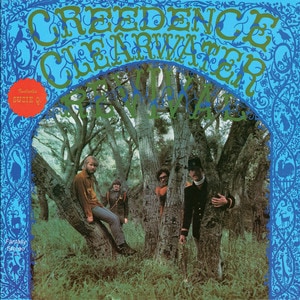
Creedence Clearwater Revival (2025 Remaster). LP · 1968. Sold out at Kilmorna in Listowel; format, release and availability details remain online.
LP · 1968
Sold out at Kilmorna Collection, retained online as part of the catalogue archive.
Creedence Clearwater Revival is the debut album where a band with a new name begins sounding older than its surroundings. Released in 1968, it introduced the world to John Fogerty, Tom Fogerty, Stu Cook and Doug Clifford under the Creedence Clearwater Revival banner after their earlier years as Tommy Fogerty & the Blue Velvets and The Golliwogs. The album does not yet have the total focus of Green River or Cosmo's Factory, but that is part of its fascination. It catches the group in transition: part garage band, part blues-rock outfit, part psychedelic-era participant, and already part of the lean swamp-rock force that would soon make them one of America's most reliable hit machines. The long version of Suzie Q is the album's anchor and first major public doorway. Built from Dale Hawkins' earlier rock and roll song, Creedence turn the track into something hypnotic, rough-edged and stretched without losing its basic pulse. It is not the concise CCR of the 1969 singles run yet. It is a band discovering how far a groove can carry them when Fogerty's guitar tone, voice and rhythmic insistence are allowed to circle the room. I Put a Spell on You performs a similar act of transformation, drawing from Screamin' Jay Hawkins but filtering the song through Fogerty's gravelly intensity. The cover choices reveal what the band valued: older American material, dramatic vocal attack, groove, repetition and a sense of menace. The original songs are where the future becomes visible. Porterville had roots in the band's late Golliwogs period, but in this context it sounds like an early map of Fogerty's working-class suspicion and compact narrative voice. Walk on the Water, Gloomy and Get Down Woman retain more of the era's psychedelic and blues-rock atmosphere, while The Working Man points toward the plainspoken social character that would become central to the band's later catalogue. There is more looseness here than on the records that followed, and the album's identity is not yet perfectly streamlined. Still, the key ingredients are present: a voice that sounds like weathered wood, a rhythm section built for direct movement, and a guitar language that cuts through period fashion. The debut also matters because it arrived at a strange angle to 1968. Much of rock culture was still fascinated by psychedelic expansion, ornate studio colour and countercultural looseness. Creedence, even at their most exploratory, sounded more grounded and stubborn. They could stretch a song, but they did not sound as if they were floating away. Their music pointed back to blues, R&B, rockabilly and country feeling while simultaneously pushing toward a harder, radio-ready future. That out-of-step quality became one of their strengths. The band did not need to sound fashionable for long; they needed to sound inevitable, and the debut already suggests that inevitability. For collectors, Creedence Clearwater Revival is not just a prologue. It is the rough beginning of a remarkably compressed story. Within roughly two years, the band would produce Bayou Country, Green River, Willy and the Poor Boys and Cosmo's Factory, a run so strong that the debut can be unfairly overshadowed. Heard closely, though, it explains the foundation. The covers show the roots. Porterville and The Working Man show the writing direction. Suzie Q shows the ability to turn borrowed material into a signature event. The album is looser than the masterpieces, but it has the charge of discovery. It lets the listener hear CCR before the formula was fully sharpened, when the swamp was still forming out of garage rock, blues memory and a voice that already sounded like it had been waiting years to arrive. The record is especially rewarding when heard as a before-picture rather than a lesser version of what followed. The later Creedence albums move with astonishing focus, but the debut still has room for experiment, shadow and stretch. That room lets the listener hear the musicians testing which parts of their past still mattered and which parts could be stripped away. The answer would soon arrive with startling speed. Here, the question is still audible, and that makes the album historically and musically alive.
Creedence Clearwater Revival matters because it is the starting point of one of rock's most concentrated album runs. The debut introduced the band's new identity in 1968 and delivered Suzie Q as the first major sign that their blend of roots material, guitar bite and Fogerty's voice could reach well beyond local recognition. It does not yet have the precision of the 1969 and 1970 records, but it contains the blueprint. The album also reveals how unusual CCR were in their own moment. While much of late-1960s rock chased psychedelic elaboration, Creedence moved toward older American forms and made them feel urgent. Their covers were not decorative tributes; they were acts of possession. Their originals suggested a songwriter already drawn to work, place, suspicion and social pressure. For collectors, the debut matters because it lets the famous sound be heard in formation. Its importance also comes from timing. The band were entering a rock world crowded with colour, improvisation and countercultural drift, yet they were already finding power in direct grooves and older song forms. That choice made them sound apart from fashion even before they became dominant. The debut is therefore not just the first chapter; it is the moment when CCR's stubborn musical direction becomes visible. It gives the later run a necessary origin point and historical tension.
For a Creedence collection, the self-titled debut is essential once the core albums are in place. It may not be the most polished or hit-dense CCR record, but it gives the origin of the band's recorded identity. Suzie Q and I Put a Spell on You show how effectively they could transform earlier songs, while Porterville and The Working Man point toward the themes John Fogerty would soon refine. Collectors interested in development will find the album especially rewarding. It bridges the garage-band past and the classic swamp-rock future, keeping more looseness and blues-rock stretch than the later albums. That makes it a different kind of listen: less definitive than Green River, less overwhelming than Cosmo's Factory, but valuable because it captures the band still becoming itself. On a shelf, it anchors the story before the great acceleration begins. It is also useful because it prevents the Creedence story from feeling too tidy. The later albums can make the band's rise seem inevitable, but the debut shows effort, search and rough edges. Those qualities are collector virtues when they reveal how a sound was assembled. Anyone who owns the peak records will hear this one with added interest, because the familiar voice, guitar bite and rhythmic discipline are already present, just not yet reduced to their final sharpness.
Raw late-1960s roots-rock and blues-rock with garage grit, stretched grooves, gravelly vocals, sharp guitar tone and early signs of CCR's swamp-rock identity.
Recommended for: CCR collectors tracing the band back to its recorded beginning; Listeners who like blues-rock covers transformed by a distinctive band; Fans of rougher debut albums that reveal a classic sound taking shape.
What year is Creedence Clearwater Revival's debut album from? The self-titled Creedence Clearwater Revival debut album was released in 1968. Which song first brought the band major attention? Suzie Q was the key early track, turning an earlier rock and roll song into a long, hypnotic CCR performance. Is the debut as focused as later CCR albums? No. It is looser and more transitional, but that is why it is valuable: it shows the classic Creedence sound forming in real time.