Vinyl Record
Crosby, Stills & Nash
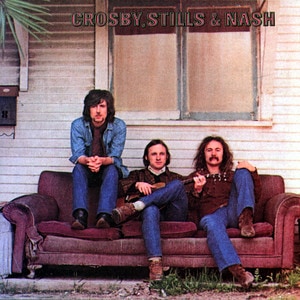
Crosby, Stills & Nash on LP vinyl. The 1969 harmony-led rock debut for classic rock listeners, available from Kilmorna Collection in Listowel, Ireland.
LP · Rock · 1969
Available from Kilmorna Collection in Listowel.
Buyer notes: 1969 LP, currently available from the Kilmorna Collection Rock shelf. Pay for pickup in Listowel, ship within Ireland from EUR 5.95 per record or outside Ireland from EUR 12.00 per record.
Crosby, Stills & Nash is one of those debuts that does not merely introduce a group; it establishes a language. Released in 1969, it brought together David Crosby after The Byrds, Stephen Stills after Buffalo Springfield and Graham Nash after The Hollies, three musicians with recognizable histories who discovered that their voices created something more precise and more mysterious in combination. The album's reputation often begins with harmony, and rightly so, because the blend is immediate. But reducing it to beautiful singing misses how much architecture sits underneath the sweetness. Stills' instrumental command gives the record muscle and movement, Crosby brings modal color, social unease and a taste for suspended moods, and Nash contributes concise melodic clarity that keeps the album from floating away. The result is soft on the surface and intricate underneath. Suite: Judy Blue Eyes opens with the ambition of a miniature suite rather than a simple single. Marrakesh Express turns Nash's pop instinct into a bright travelogue. Guinnevere is hushed and elliptical, Helplessly Hoping is almost impossibly balanced, Wooden Ships stretches toward apocalyptic folk-rock, and Long Time Gone gives Crosby's political urgency a darker charge. The album appeared at a point when rock was moving away from the idea of the anonymous band and toward personality, authorship and cross-pollination between folk, blues, pop and electric experimentation. CSN embodied that shift. They sounded intimate even when the writing was grand, and they sounded polished without losing the feeling that three distinct people were negotiating space in real time. That is the album's central drama: the voices blend, but the identities remain audible. You can hear why the trio became a supergroup, yet the record avoids the stiffness that can come with that word. It feels handmade, airy and conversational, as if the songs were arranged around the discovery that the blend itself could be an instrument. The track list also captures a rare balance between era-defining songs and album continuity. Several pieces became fixtures of late-1960s rock memory, but the record still plays as a unified set because the emotional palette is so consistent: longing, escape, romance, dread, friendship, and a belief that acoustic music could carry adult complexity without surrendering immediacy. It is also the last album by the trio before Neil Young joined the wider configuration, which gives it a special clarity. Before the mythology expanded, before the internal tensions became part of the public story, this album documented the first full statement of Crosby, Stills & Nash as a three-voice idea. Its influence runs through singer-songwriter rock, harmony-driven Americana and countless bands that tried to make intimacy sound large. More than half a century later, the album still feels alive because it does not rely on nostalgia alone. Its craft is visible, its songs are durable, and its atmosphere remains remarkably inviting. The album's continuing force also comes from how confidently it uses contrast. Stills can move from the multi-part sweep of Suite: Judy Blue Eyes to the taut support work that lets Nash and Crosby occupy more fragile spaces. Nash's songs can sound open and accessible while still carrying adult ambiguity. Crosby's writing brings the shadows that keep the record from becoming simply sunlit. Even the gentlest moments carry friction: travel is not pure escape, love is not pure safety, and harmony does not erase tension. That emotional mixture is one reason the debut has aged better than many albums built around a single 1960s mood. It contains optimism, but it also hears the world darkening. It contains virtuosity, but it rarely parades it. It contains famous songs, but the lesser-discussed tracks help maintain the album's shape. The record's influence is easy to hear in later acoustic rock, country-rock and harmony pop, yet few descendants match its combination of immediacy and internal complexity. It remains approachable because the melodies welcome the listener; it remains important because the arrangements keep revealing new angles.
This album matters because it helped define what late-1960s folk-rock could become when vocal harmony, individual authorship and studio craft were treated as equal forces. The trio did not erase their prior bands; they carried those histories into a new format and made the blend itself the signature. That changed the expectations around the supergroup idea. Instead of a display of ego or volume, Crosby, Stills & Nash offered a model of interdependence: three writers, three voices, one sound built from difference. The record also became a bridge between the communal idealism of the era and the singer-songwriter focus that would dominate much of the early 1970s. Suite: Judy Blue Eyes, Wooden Ships, Helplessly Hoping and Long Time Gone are not only familiar songs; they are examples of how melody, politics and intimacy could share the same record without feeling forced. Its importance is both historical and musical. It captures a turning point, but it also remains playable because the arrangements still breathe. The album also gave a generation of listeners a different image of rock authority. Power did not have to mean volume, and seriousness did not require abandoning melodic pleasure. By placing three distinct writers in one shared vocal frame, the trio created a model for collaboration that influenced both mainstream and roots-oriented music long after the 1960s ended.
For a collector, the self-titled Crosby, Stills & Nash album is foundational. It is the cleanest first statement of the trio before the CSNY story widened the frame, and it belongs beside Deja Vu, the early solo albums and later CSN work as the place where the vocal identity first becomes unmistakable. It is also a record that rewards attention to sequence. The famous songs are obvious anchors, but the album's quieter power comes from how those songs speak to one another: romance moving into anxiety, acoustic delicacy giving way to electric tension, close harmony opening into social unease. This is a strong shelf piece for anyone building around Laurel Canyon, Atlantic-era folk-rock or the late-1960s shift from psychedelic excess toward songwriter-led intimacy. It should be valued as an album with depth, not only as a container for a few classics. Its durability comes from the full conversation between three musicians learning what their combined voice could hold. It is also a record that benefits from being heard in clean album order rather than chopped into playlist fragments. The opening grandeur, mid-album hush and darker later passages create a movement that explains the group's range better than any single song. For a collection, that makes it a foundational listening object as much as a historical title.
Polished but intimate folk-rock with close three-part harmonies, acoustic guitar detail, blues and Latin touches, and moments of electric tension.
Recommended for: Collectors building a core late-1960s folk-rock shelf; Listeners who value harmony-led songwriting with real instrumental craft; Fans tracing the path from The Byrds, Buffalo Springfield and The Hollies into Laurel Canyon rock.
What year is Crosby, Stills & Nash from? The self-titled debut album was released in 1969. Is Neil Young on this album? No. This is the trio's debut before Neil Young joined the wider Crosby, Stills, Nash & Young configuration. What are the key songs? Suite: Judy Blue Eyes, Marrakesh Express, Guinnevere, Wooden Ships, Helplessly Hoping and Long Time Gone are all central to the album's reputation.