Vinyl Record
D'Angelo and The Vanguard - Black Messiah
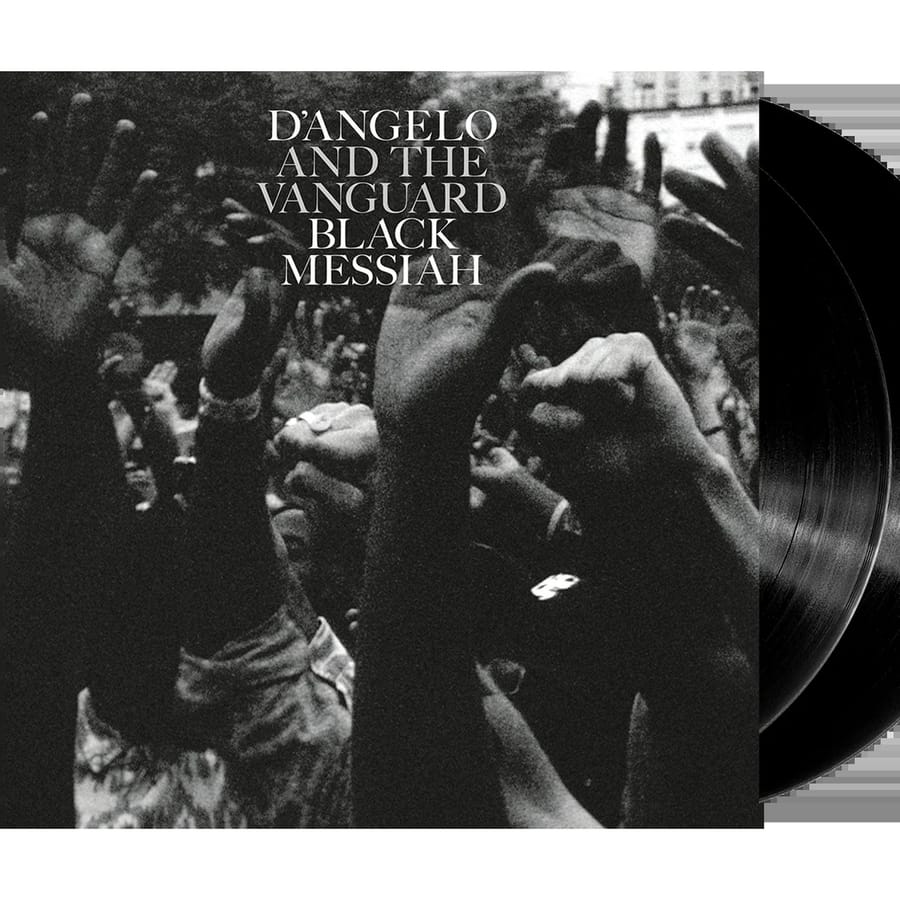
D'Angelo & The Vanguard - Black Messiah. 2LP · Rock · 2014. Sold out at Kilmorna in Listowel; format, release and availability details remain online.
2LP · Rock · 2014
Sold out at Kilmorna Collection, retained online as part of the catalogue archive.
Black Messiah is the rare comeback album that refuses the comfort of return. Released in December 2014 and credited to D'Angelo and The Vanguard, it arrived fourteen years after Voodoo, a gap long enough for expectation to harden into myth. The album could have satisfied listeners by proving that D'Angelo could still sing, still groove and still invoke the lineage of soul, funk and R&B that had shaped Brown Sugar and Voodoo. Instead, Black Messiah feels more urgent, more collective and more politically charged than a simple reappearance. It sounds as if the years of silence, studio work, public pressure and social unrest all entered the music and came out as something dense, unstable and alive. The Vanguard name matters because the record is not only a solo auteur statement. It is a band record in spirit, with musicians such as Questlove, Pino Palladino, Kendra Foster, Jesse Johnson, Isaiah Sharkey and Roy Hargrove helping create a thick, breathing field of rhythm and tone. The grooves rarely sit perfectly upright. They lean, drag, lurch and bloom, recalling Sly Stone, Parliament-Funkadelic, Prince, Marvin Gaye, J Dilla, gospel, rock and hip-hop without becoming a museum of influences. Ain't That Easy opens with a swagger that is already warped around the edges. 1000 Deaths pushes into distorted militancy. The Charade gives the album one of its clearest political wounds. Really Love offers romance, but even its beauty feels surrounded by history. Sugah Daddy loosens the room, while Prayer and Another Life deepen the record's spiritual and emotional reach. What makes Black Messiah extraordinary is how little it separates the body from politics or pleasure from grief. D'Angelo's vocals are often mixed as texture as much as message; words blur, harmonies thicken, and the listener has to move toward the record rather than having every line presented cleanly. That can make the album feel difficult on first contact, but the difficulty is part of its ethics. It asks to be inhabited, not skimmed. The timing of its release intensified the response, because the album arrived amid public anger over state violence and the failures of accountability in the United States. Yet it does not behave like a topical pamphlet. Its politics are older, wider and more embodied, tied to Black survival, community, erotic life, spiritual endurance and the burden of being seen through distorted public narratives. As D'Angelo's third studio album, it also changes the shape of his catalog. Brown Sugar introduced a young musician in command of voice and groove. Voodoo expanded the language into a humid, experimental neo-soul summit. Black Messiah makes the project collective, historical and insurgent. It is an album about leadership that distrusts the single heroic leader, a soul record that keeps exploding into rock and funk, and a love record that understands love as pressure, labor and refuge. Its greatness lies in that refusal to simplify. The album's density also reflects a refusal to make Black musical history behave politely. Many of its references are audible, but they arrive as pressure rather than quotation. The bass can suggest one lineage, the guitar another, the vocal stacks another, and the drums another, all moving together with a feeling of controlled disorder. That is why the record can sound murky and clear at the same time. The message is not always delivered through crisp diction; it is carried by bodies in motion, by rhythm that seems to stagger and recover, by harmonies that crowd around the lead voice like witnesses. This approach makes the album especially powerful after repeated listening. At first the listener may notice the headlines: the long absence, the surprise arrival, the political urgency. Later, the deeper craft becomes unavoidable. Every rough edge has placement. Every moment of beauty is shadowed by struggle. Every groove seems to ask whether pleasure can survive history without pretending history is gone. That question gives Black Messiah its lasting moral and musical force.
Black Messiah matters because it turned an impossible wait into a work that met the historical moment without being trapped by it. D'Angelo had become a symbol of absence after Voodoo, and many listeners expected any return to be measured mainly against that absence. Instead, the album expanded his music into a collective, politically awake and rhythmically unstable form that felt both ancient and immediate. It also challenged the smoother idea of neo-soul that had grown around him. The record is messy in a deliberate way: voices submerged, grooves off-center, guitars and horns flaring, lyrics moving between sensuality, faith and rage. That made it one of the central R&B albums of the 2010s and a major statement about Black music as living memory rather than genre branding. Its importance is not only that D'Angelo returned, but that he returned with an album that sounded necessary, unresolved and brave. The album also gave contemporary listeners a rare example of political music that did not sacrifice sensuality, ambiguity or musical difficulty. It can be angry, tender, erotic, spiritual and evasive in the same breath. That complexity is precisely why it has lasted as more than a protest-era timestamp. It feels like a living argument about what freedom might sound like. It also widened the emotional vocabulary available to mainstream discussions of R&B, insisting on unrest, opacity and collective strength.
For collectors, Black Messiah is indispensable in any modern soul, R&B or 2010s album shelf. It is not merely the long-awaited third D'Angelo album; it is the moment his catalog turns outward into band identity, protest energy and historical argument. The record rewards serious listening because its details are not always placed in the foreground. Bass movement, drum feel, vocal layering, guitar grit and horn color all matter. It is also a powerful companion to Voodoo because it shares a deep rhythmic intelligence while sounding more volatile and more public in its concerns. Listeners should not expect a clean set of radio singles or a nostalgic revival of Brown Sugar. The collector appeal is the whole work: a dense, ambitious, politically alive album that reveals new relationships between groove, voice and message with each play. It is one of the decade's defining Black music statements. It is also an album whose credit matters for collection context. Shelving it with D'Angelo's solo titles makes sense, but the Vanguard identity signals the communal method behind the music. That distinction helps listeners hear the record as a band-shaped statement, not only as the reappearance of a solitary genius. Its collectability is tied to that scale and ambition. It also stands as a record of timing: long-made music released when its urgency suddenly felt unavoidable.
Dense, off-center funk and soul with submerged vocals, elastic bass, loose drums, rock guitar grit, horn color and a charged political pulse.
Recommended for: D'Angelo listeners ready for his most politically urgent and collective album; Collectors of 2010s R&B, funk, soul and Black protest music; Fans of rhythmically deep records that reward repeated close listening.
What year is Black Messiah from? Black Messiah was released in December 2014. Why is the artist credited as D'Angelo and The Vanguard? The credit reflects the album's collective band identity, with D'Angelo working alongside a close group of musicians and collaborators. Is Black Messiah connected to Voodoo? Yes. It followed Voodoo after a fourteen-year gap, but it is darker, more political and more band-driven than a simple continuation.