Vinyl Record
D'Angelo - Brown Sugar
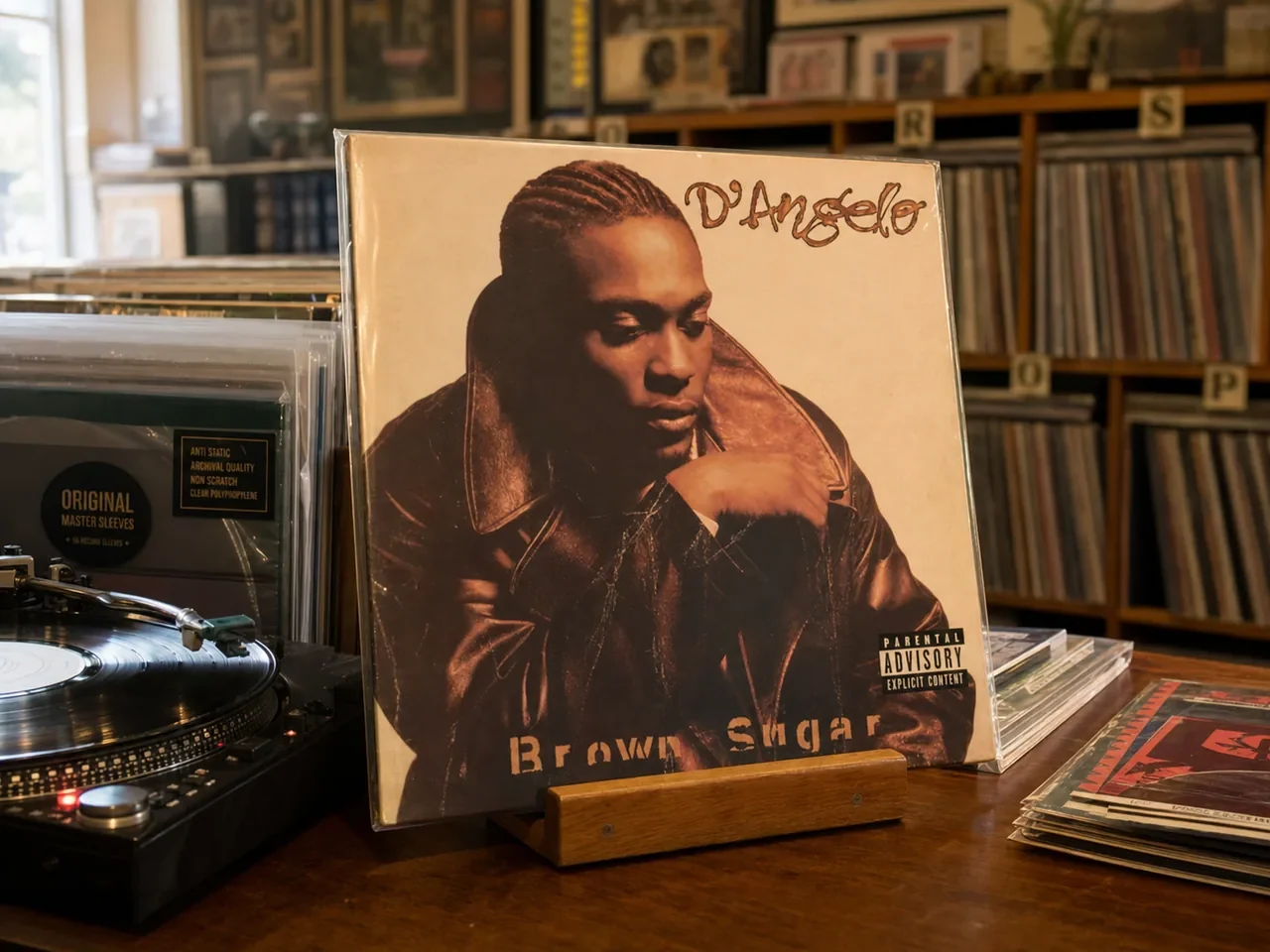
D'Angelo - Brown Sugar on 2LP vinyl, released in 1995. Check price, stock, collection and delivery from Kilmorna in Listowel.
2LP · 1995
Available from Kilmorna Collection in Listowel.
Buyer notes: 1995 2LP, currently available from the Kilmorna Collection vinyl shelf. Pay for pickup in Listowel, ship within Ireland from EUR 5.95 per record or outside Ireland from EUR 12.00 per record.
D'Angelo's Brown Sugar is on the shelf today: a 1995 2LP where R&B, soul and hip-hop timing all sit down together and decide not to rush.
Brown Sugar is the 1995 debut that introduced D'Angelo as a fully formed musician at the exact moment R&B was ready for a different kind of classicism. The album did not reject contemporary rhythm and production, but it carried a deep affection for earlier Black music: Marvin Gaye, Stevie Wonder, Prince, gospel harmony, jazz-inflected keyboard voicings, hip-hop swing and the slow-burn sensuality of 1970s soul. What made Brown Sugar feel new was not that D'Angelo knew those references. Many artists did. It was that he treated them as living tools rather than museum pieces. He played, sang, arranged and produced with the confidence of someone who had studied the past intensely but did not want to cosplay it. The title track is the obvious doorway, a groove so relaxed and self-contained that it almost hides its sophistication. Cruisin' reimagines Smokey Robinson with warmth rather than mimicry. Lady became the major pop breakthrough, but its charm depends on vocal layering and pocket as much as hook. Jonz in My Bonz, Me and Those Dreamin' Eyes of Mine and Higher move through desire, devotion and interior mood with a musician's patience. Even when the writing is direct, the feel is never flat. D'Angelo's voice stacks against itself, slips behind the beat, opens into falsetto and returns to grain. He sounds young, but not naive. He sounds like a student and a master at once, which is part of the album's spell. Brown Sugar also helped crystallize what would be discussed as neo-soul, though the album itself is more fluid than any label placed on it afterward. It belongs to R&B, soul, funk and hip-hop, but its real home is the groove. The drums and keys do not simply support the songs; they create a room where D'Angelo can test identity, sensuality and musicianship. The production is warm and spare compared with later R&B maximalism, yet it is full of small decisions: background voices arranged as atmosphere, keyboards that thicken without crowding, bass movement that makes even the quietest tracks feel alive. The album's importance grows when heard beside Voodoo and Black Messiah. Those later records are deeper, stranger and more radical in structure, but Brown Sugar is where the vocabulary first appears. It shows D'Angelo's commitment to feel over display, to musicianship as atmosphere, and to sensuality as something more complicated than surface seduction. It also captures a young artist turning private study into public language. In 1995, that language gave R&B a route back through its own history while keeping one foot in hip-hop's present. The album still feels inviting because it is not trying to overwhelm the listener. It pulls you closer, lets the groove do the persuading and trusts the voice to reveal the rest. The album also benefits from how carefully it balances confidence and vulnerability. D'Angelo's musicianship is obvious, but he rarely turns the record into a demonstration. Instead, the performances feel conversational, as though the listener has been invited into a room where groove is the native language. That modest scale is deceptive. Brown Sugar helped change expectations around what a young male R&B artist could be in the mid-1990s: not only a vocalist fronting producer-driven tracks, but a musician shaping the whole environment around his voice. The album's sensuality is also more nuanced than its reputation can suggest. Desire appears, but so do humor, devotional feeling, interior drift and the pleasure of musicians playing inside a pocket they trust. The record is historically important because it helped name a shift, yet it remains emotionally effective because it never sounds like an academic exercise. D'Angelo loved the past, but he also understood that love must move. Brown Sugar moves with ease, patience and a deep sense of touch. That sense of touch is why the album still sounds fresh beside later work that tried to imitate its surface. The important thing is not just the vintage flavor, but the way D'Angelo makes every influence answer to his own timing, phrasing and atmosphere.
Brown Sugar matters because it helped open a path for 1990s R&B that was modern without cutting itself off from older soul traditions. D'Angelo arrived as a singer, songwriter, producer and instrumental presence who could make historical knowledge feel relaxed and contemporary. That combination became central to the neo-soul conversation, but the album's importance goes beyond genre naming. It gave listeners a groove-based, musicianly alternative to both glossy adult R&B and harder-edged hip-hop soul, while still understanding the rhythmic lessons of hip-hop. The record also established D'Angelo's core artistic values: pocket, tone, layered vocals, sensual ambiguity and deep respect for Black musical memory. Lady and Brown Sugar made the commercial case, but the album as a whole made the artistic one. It introduced an artist whose restraint was as distinctive as his virtuosity, and whose later experiments would make more sense because this debut had already defined the foundation. It also matters because it gave later artists permission to foreground musicianship without abandoning the immediacy of R&B song form. The album is sophisticated, but it does not announce sophistication with distance. It lets harmonic knowledge, instrumental feel and vocal arrangement work in service of pleasure. That combination became a template for a wide field of late-1990s and 2000s soul-rooted music.
For collectors, Brown Sugar is the necessary first chapter of D'Angelo's catalog. It is easier to enter than Voodoo or Black Messiah, but it should not be treated as a minor beginning. The album contains the seeds of everything that follows: the patient groove logic, the self-harmonizing vocals, the keyboard-centered warmth, the refusal to separate old soul knowledge from contemporary rhythm. It is especially strong in a collection focused on 1990s R&B, neo-soul, hip-hop soul and artist-producer debuts. It also pairs well with records by Erykah Badu, Maxwell, A Tribe Called Quest, Prince and classic 1970s soul artists, because it stands at the crossroads between those worlds. The collector appeal is both historical and pleasurable. Brown Sugar is important, but it is also deeply playable: relaxed enough for casual listening and detailed enough for close attention. For long-term listening, Brown Sugar is also the D'Angelo album most likely to convert someone through warmth before complexity. That makes it valuable as both an entry point and a repeat-play record. In a collection, it clarifies where the later ambition began: not as a sudden leap, but as the natural expansion of a debut already full of discipline and feel. It also helps separate D'Angelo's career from the simplified idea of a sudden masterpiece arriving with Voodoo. The debut already contains the patience and rigor.
Warm, groove-centered R&B with hip-hop swing, gospel-toned vocal layers, jazz-soul keyboards, supple bass and relaxed but exact rhythmic feel.
Recommended for: Listeners starting D'Angelo's catalog from the beginning; Collectors of 1990s R&B, neo-soul and hip-hop soul foundations; Fans of warm grooves, layered vocals and musician-led soul records.