Vinyl Record
D'Angelo - Voodoo
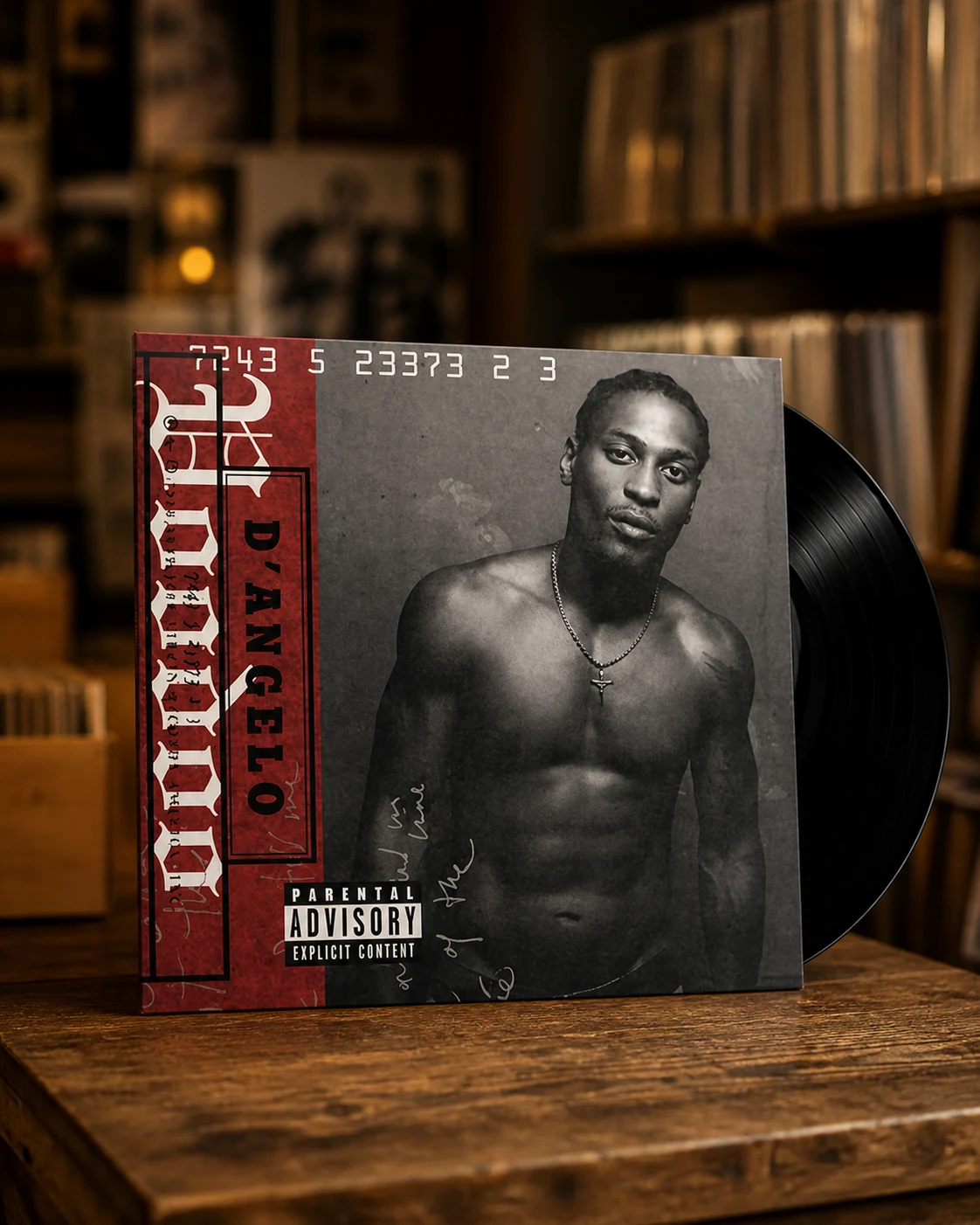
D'Angelo - Voodoo on 2LP vinyl, released in 2000. Check price, stock, collection and delivery from Kilmorna in Listowel.
2LP · 2000
Available from Kilmorna Collection in Listowel.
Buyer notes: 2000 2LP, currently available from the Kilmorna Collection vinyl shelf. Pay for pickup in Listowel, ship within Ireland from EUR 5.95 per record or outside Ireland from EUR 12.00 per record.
D'Angelo is on the shelf today with Voodoo, a 2000 2LP where soul, funk, gospel, jazz and hip-hop move together by listening harder than the clock.
Voodoo is D'Angelo's 2000 masterwork, an album that seems to breathe from below the grid of ordinary R&B time. Five years after Brown Sugar, D'Angelo returned with a record shaped by study, collaboration and immersion at Electric Lady Studios, where the Soulquarians circle helped develop a language that was loose, learned and physically exact. The album is often described through its groove, but the groove is not simply laid-back. It is intentionally unstable, dragging behind the beat, leaning into silence, letting bass and drums create tension from microscopic delays. Questlove's drumming and Pino Palladino's bass are central to that feel, but Voodoo is not a rhythm-section showcase in isolation. It is a whole ecosystem of voice, keys, guitar, percussion, background arrangement and historical memory. D'Angelo draws from funk, gospel, blues, jazz, hip-hop, soul and rock, yet the record never becomes a neat tour of influences. It feels humid, dimly lit and alive, as if the songs are being discovered in real time by musicians who trust the pocket more than the clock. Playa Playa opens like an invitation into a private ceremony. Devil's Pie brings a sharper hip-hop edge and moral unease. One Mo'Gin turns longing into suspended motion. The Root is all bass pressure and ache. Spanish Joint lifts into Latin-tinged momentum without breaking the spell. Untitled became the album's public flashpoint, but inside the record it is not just a sensual set piece; it is part of a broader meditation on desire, vulnerability and exposure. The surrounding mythology of the video sometimes distracts from how carefully the album is built. Voodoo is erotic, but it is also spiritual, anxious, scholarly and communal. It is a record made by musicians listening extremely hard to one another. The lyrics often matter less as plain narrative than as texture and emotional trigger, with D'Angelo's voice layered, blurred, doubled and stretched until it becomes another instrument in the rhythm. The album's relationship to the past is equally important. It studies Sly Stone, Jimi Hendrix, Marvin Gaye, Prince, George Clinton, gospel tradition and hip-hop production without copying any one ancestor. Instead, it asks what Black music history feels like when treated as a living current flowing through the studio. That is why Voodoo became so influential. It did not simply revive soul; it changed what contemporary soul could sound like when musicians privileged feel, imperfection and collective intuition over polished symmetry. The album rewards repeated listening because its drama is internal. The hooks are there, but the deeper satisfaction comes from details: a snare placed late, a bass phrase turning the room, a vocal harmony emerging like smoke, a guitar line flickering and vanishing. Voodoo is not background warmth. It is a dense, sensual, intellectually serious record that asks the body to think. The album's radical quality becomes clearer when compared with the expectations surrounding R&B at the time. Many records pursued brightness, clarity and immediate chorus impact. Voodoo often chooses murk, delay and cumulative pressure. It trusts the listener to feel meaning before naming it. That trust is part of its intimacy. The musicians do not sound as if they are playing to impress a room; they sound as if they are building a room and inviting the listener to adjust to its air. The influence of hip-hop is also crucial, not only in obvious rhythm or guest presence but in the way the album treats repetition, loop feel and texture as expressive tools. Yet Voodoo is never merely beat music. Gospel harmony, blues ache, jazz looseness and funk discipline keep pulling the record in different directions, while D'Angelo's voice holds those directions together. Its sensuality is famous, but the deeper subject may be surrender: to time, to touch, to ancestry, to band chemistry and to the possibility that a song can reveal more by refusing to hurry. That refusal to hurry is also why the album continues to feel contemporary. Trends around it have changed many times, but Voodoo's commitment to feel, breath and ensemble intuition keeps it outside ordinary period styling.
Voodoo matters because it reset the possibilities for modern soul at the start of the 2000s. Brown Sugar had already established D'Angelo as a major talent, but Voodoo turned his music into a deeper system of rhythm, history and atmosphere. The album's feel became legendary because it resisted the clean quantized surface that dominated much contemporary production. Its grooves breathe, drag and bend, making imperfection feel intentional and human. It also brought the Soulquarians moment into one of its clearest recorded forms, connecting R&B, hip-hop, jazz musicianship and Black music scholarship inside a single album. The influence is enormous: countless artists learned from its pocket, its vocal layering, its refusal to rush and its belief that sensual music could also be formally radical. Voodoo is not important only because it is beautiful. It is important because it changed the standard for depth, feel and ensemble intelligence in contemporary R&B. It also matters because it remains a benchmark for albums that sound handmade inside the studio. Voodoo does not reject technology; it bends production toward human feel. That choice influenced musicians, producers and singers who wanted records to breathe again. Its reputation is not just critical consensus. It survives because players study it, singers study it and listeners keep finding new movement inside its shadows. It remains a practical lesson in how radical restraint can be.
For collectors, Voodoo is the central D'Angelo title and one of the essential R&B albums of its era. Brown Sugar introduces the language and Black Messiah politicizes and fractures it, but Voodoo is the deep chamber where the whole system reaches full power. It belongs in collections focused on neo-soul, Soulquarians, Electric Lady-associated sessions, late-1990s and early-2000s R&B, and records where groove is the main architecture. It is also an album that benefits from uninterrupted playback. Individual songs are strong, but the full sequence creates the sensation of entering and staying inside a carefully tuned environment. Collectors should value it for musicianship as much as fame: drums, bass, keys, guitar, vocal stacking and mix decisions are all part of the experience. It remains a record that serious listeners return to because it keeps teaching the ear how to hear time, touch and restraint. In collection terms, Voodoo is the kind of album that can organize a whole shelf around it. Place it near Brown Sugar and Black Messiah, and D'Angelo's evolution becomes clear. Place it near Soulquarians-related work, and the collaborative moment expands. Place it near classic funk and soul, and its ancestral conversation becomes audible. Few modern R&B records connect so many paths while sounding so self-contained. It is a record to keep close because its influence keeps becoming easier to hear as later artists reveal what they learned from it.
Deep, humid neo-soul with behind-the-beat drums, elastic bass, layered vocals, smoky keyboards, funk scholarship and a slow-burning erotic charge.
Recommended for: Collectors seeking a cornerstone 2000s R&B and neo-soul album; Listeners fascinated by groove, pocket and rhythm-section detail; Fans of D'Angelo, Soulquarians, Questlove, Pino Palladino and Electric Lady-era soul experimentation.