Vinyl Record
Dio - Angry Machines
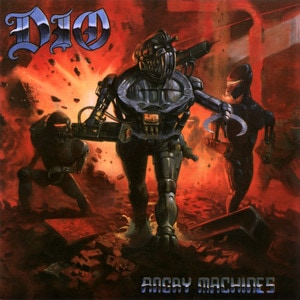
Dio - Angry Machines on LP vinyl. A 1996 Metal record available from Kilmorna Collection in Listowel, Ireland.
LP · Metal · 1996
Available from Kilmorna Collection in Listowel.
Buyer notes: 1996 LP, currently available from the Kilmorna Collection Metal shelf. Pay for pickup in Listowel, ship within Ireland from EUR 5.95 per record or outside Ireland from EUR 12.00 per record.
Angry Machines is the Dio album that makes the most sense when it is heard as a confrontation with the mid-1990s rather than as a failed attempt to return to Holy Diver. Released in 1996, it belongs to the darker stretch that followed Strange Highways, when Ronnie James Dio's band was working in a metal landscape reshaped by grunge, groove metal, industrial heaviness and a general suspicion of old heroic gestures. The result is blunt, tense and deliberately ungilded. Institutional Man sets the tone with a grinding social anger that feels far removed from dragon-slayer grandeur. Don't Tell the Kids, Black and Hunter of the Heart push the record toward a more modern weight, with Tracy G's guitar sound favoring abrasion and pressure over the cleaner, mythic sweep associated with the classic Dio era. That shift can be divisive, but it is also the point. Angry Machines is a record about a legendary voice refusing to pretend the surrounding decade has not changed. Ronnie still sings with authority, but the theatre is harsher now: suspicion of institutions, corrupted power, private paranoia and American unease replace the clearer fantasy-metal archetypes. This Is Your Life closes the album in a more exposed emotional register, reminding the listener that Dio's dramatic gift was never only about volume. The album's reputation has often been difficult because it asks a lot from fans who come to Dio for uplift, speed and gleaming metal architecture. It is slower, grimmer and more claustrophobic than that expectation. Yet as a catalogue piece, it is fascinating. It shows a band trying to survive a changing heavy-music climate by leaning into density and discomfort. Not every listener will choose it first, but the record has a stubborn identity: it is mechanical, wary, politically sour and more experimental than its plain surface suggests.
Angry Machines matters because it captures Ronnie James Dio in a period when legacy alone was not enough. The album tests how his voice and moral imagination behave inside a heavier, more groove-driven 1990s frame. That makes it an important counterweight to the better-loved 1980s records. It is not the fantasy-metal monument; it is the uneasy late-century machine room. For serious Dio listeners, the album reveals how much of his art depended on conviction rather than setting. Even when the riffs darken and the production language changes, the songs are still built around warnings, judgment, temptation and the fight to keep human dignity intact.
For collectors, Angry Machines is a deeper-catalogue Dio title rather than a casual starter. Its appeal is strongest once the core albums are already familiar, because its differences become more legible against that history. It belongs beside Strange Highways as part of the 1990s chapter where Dio's music became more severe and earthbound. Buyers should value it for its tension, heaviness and uncomfortable place in the story, not for a replay of Rainbow in the Dark. On the shelf, it helps complete the picture of an artist who kept moving through hostile musical weather instead of staying frozen in his most celebrated pose.
Dark, groove-heavy mid-1990s metal with grinding guitars, claustrophobic pacing, social unease and Ronnie James Dio's commanding voice pushed into a harsher frame.
Recommended for: Dio collectors moving beyond the classic 1980s albums; Listeners interested in the heavier 1990s Strange Highways era; Metal fans who like darker, more abrasive late-career turns.
What year is Angry Machines from? Angry Machines was originally released in 1996. Is Angry Machines a good first Dio album? It is better as a later stop. New listeners usually understand it more clearly after hearing the classic Dio records and Strange Highways. What makes Angry Machines different? It leans into darker, groove-driven 1990s metal and social tension rather than the brighter fantasy-metal drama of Dio's best-known work.