Vinyl Record
Electric Light Orchestra - Discovery
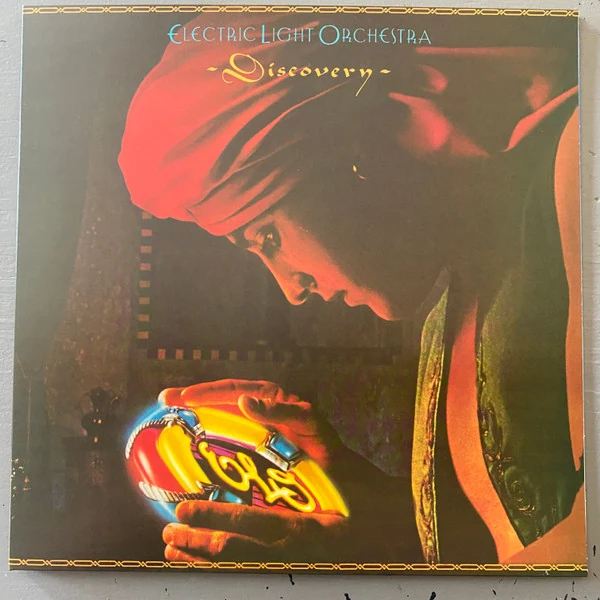
Electric Light Orchestra - Discovery on LP vinyl, released in 1979. Check price, stock, collection and delivery from Kilmorna in Listowel.
LP · 1979 · Jet / Legacy
Available from Kilmorna Collection in Listowel.
Buyer notes: 1979 LP on Jet / Legacy, currently available from the Kilmorna Collection vinyl shelf. Pay for pickup in Listowel, ship within Ireland from EUR 5.95 per record or outside Ireland from EUR 12.00 per record.
“Discovery” finds Electric Light Orchestra at the close of the 1970s, leaning fully into the sleek pop and disco currents of the era while keeping their trademark melodic craft intact. Across the album’s nine songs, Jeff Lynne and company pivot from orchestral rock to a tighter, more rhythm-driven sound, built around bright keyboards, layered vocals, and instantly memorable hooks. The record opens with the exuberant “Shine a Little Love,” setting a tone of buoyant, dance-friendly energy that runs through “Confusion,” “Last Train to London,” and the stomping closer “Don’t Bring Me Down.” Softer moments like “Need Her Love” and “Midnight Blue” showcase the band’s feel for romantic balladry, while “The Diary of Horace Wimp” adds a whimsical storytelling touch that recalls their earlier conceptual work. Released in 1979, “Discovery” captures a band consciously updating its sound without losing its identity. The album’s concise structure and consistent mood make it one of ELO’s most approachable front-to-back listens, bridging classic rock, radio pop, and late‑70s dance floors in a way that still feels cohesive today.
“Discovery” is a key turning point in ELO’s story, marking the moment their symphonic rock roots intersected with the late‑70s pop and disco landscape. Its run of singles, from the effervescent “Shine a Little Love” to the driving “Don’t Bring Me Down,” helped redefine what a rock band with orchestral ambitions could sound like in a changing musical climate. For listeners and collectors, the album stands as a snapshot of a band adapting rather than repeating themselves. It remains a reference point for how rock acts folded danceable grooves, lush production, and sophisticated songwriting into a single, coherent statement.
For a collection that traces the evolution of classic rock into the slicker textures of the late 1970s, “Discovery” is an essential anchor. Its nine-song sequence is compact and focused, making it a satisfying play-through for both casual listeners and dedicated ELO fans. This album also pairs naturally with earlier ELO titles that emphasize their orchestral side, allowing collectors to hear how the band’s sound shifted over time. As a widely loved studio album with several enduring songs, it tends to be revisited often, which makes a well-kept copy a practical as well as a nostalgic addition.
A polished, late‑70s blend of melodic rock, pop, and disco-inflected grooves with bright keyboards, tight rhythms, and smooth vocal layers.
Recommended for: Fans of melodic 1970s rock looking for a more polished, danceable edge; Listeners who enjoy pop albums built around strong, radio-ready singles; Collectors tracing Electric Light Orchestra’s evolution across the 1970s; Rock listeners curious about the intersection of classic rock and disco-era production; Newcomers seeking an accessible entry point into ELO’s catalogue.
Is “Discovery” a full studio album or a compilation? “Discovery” is a full-length studio album by Electric Light Orchestra, featuring nine original tracks recorded and released in 1979. Which well-known songs are on this album? The album includes several of ELO’s most recognizable tracks, such as “Shine a Little Love,” “Last Train to London,” and “Don’t Bring Me Down,” alongside deeper cuts like “Need Her Love” and “On the Run.” Where does “Discovery” fit within ELO’s musical style? “Discovery” comes after the band’s more orchestral mid‑70s work and emphasizes a sleeker, pop-leaning sound, blending rock songcraft with late‑70s dance and disco influences while retaining their characteristic melodic focus.