Vinyl Record
Bill Evans - Green Dolphin Street
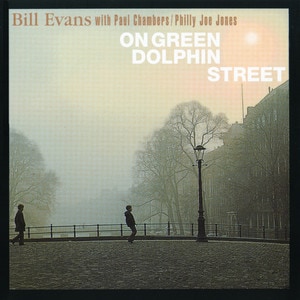
Bill Evans - Green Dolphin Street. LP · Jazz · 1959. Sold out at Kilmorna in Listowel; format, release and availability details remain online.
LP · Jazz · 1959
Sold out at Kilmorna Collection, retained online as part of the catalogue archive.
Green Dolphin Street is Bill Evans in the charged corridor between small-group modern jazz and the modal future he was about to help define. The core 1959 session places Evans with Paul Chambers and Philly Joe Jones, two musicians deeply associated with Miles Davis's orbit, and that context matters. This is not the floating, telepathic Evans trio of the Village Vanguard era; it is a tougher, more driving setting where Evans's lyric intelligence meets a rhythm section with hard-bop authority. You and the Night and the Music, My Heart Stood Still, On Green Dolphin Street, How Am I to Know? and Woody'n You show Evans moving through standards and bop language with a different kind of pressure than on his most famous trio recordings. Chambers gives the music a centered, singing bass presence, while Jones brings crisp propulsion and cymbal lift. Evans does not dominate by force. He changes the conversation through voicing and line, letting the tunes keep their structure while opening small harmonic doors inside them. The later material connected to the set, including Zoot Sims, Jim Hall, Ron Carter and Jones on the 1962 selections, widens the frame toward a more arranged and ensemble-minded Evans world. Taken together, Green Dolphin Street is a collector's route into Evans as collaborator, not only as inward poet. It catches him around a historically fertile period, close to the Kind of Blue moment, and reminds the listener that his delicacy was always backed by serious rhythmic intelligence.
Green Dolphin Street matters because it places Evans in conversation with players who link his trio art to the broader late-1950s jazz mainstream. The 1959 material has special weight: Chambers and Jones bring a Davis-connected rhythmic vocabulary, while Evans brings the harmonic imagination that would soon become central to modern piano. For collectors, it is a valuable view of Evans outside the most repeated canon.
This is the Bill Evans record to choose when the shelf needs the harder-swinging, historically adjacent side of his work. It is not a replacement for Portrait in Jazz, Explorations or Waltz for Debby; it complements them by showing how Evans sounds with a rhythm team that pushes from a different angle. It also pairs well with Miles Davis, Philly Joe Jones, Paul Chambers and Jim Hall records from the same broad modern-jazz ecosystem.
Late-1950s modern jazz with lyrical piano, firm hard-bop propulsion, singing bass lines, crisp drums and standards opened by Evans's harmonic patience.
Recommended for: Bill Evans listeners who want sessions beyond the famous trio albums; Collectors interested in the Miles Davis-adjacent 1959 jazz world; Fans of piano trio records with both lyricism and rhythmic bite.
What year does Green Dolphin Street center on? The core session centers on 1959, with related later material expanding the set's frame. Who plays on the main trio material? Bill Evans is joined by Paul Chambers on bass and Philly Joe Jones on drums for the main 1959 performances. How does it compare with Waltz for Debby? It is generally more hard-bop rooted and rhythmically direct, while Waltz for Debby is more intimate and conversational in the classic Evans trio sense.