Vinyl Record
Billie Holiday - All or Nothing at All
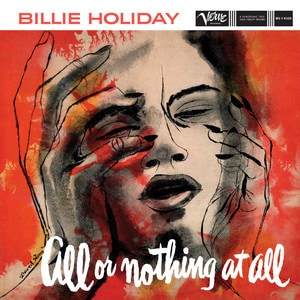
Billie Holiday - All or Nothing at All on LP vinyl. A 1958 Jazz record available from Kilmorna Collection in Listowel, Ireland.
LP · Jazz · 1958
Available from Kilmorna Collection in Listowel.
Buyer notes: 1958 LP, currently available from the Kilmorna Collection Jazz shelf. Pay for pickup in Listowel, ship within Ireland from EUR 5.95 per record or outside Ireland from EUR 12.00 per record.
All or Nothing at All belongs to Billie Holiday's late Verve period, when the drama in her singing had moved from youthful swing into something smaller, sharper and more deliberate. Released in 1958, the album draws on sessions from the mid-1950s and places Holiday with a deeply sympathetic small-group setting rather than a grand orchestral frame. That matters: the band gives her room to bend a line, delay a word, and turn familiar standards into miniature scenes of memory and self-possession. The title is almost too perfect for this stage of Holiday's art. She no longer needed volume or pristine tone to command a song. On material associated with romance, regret and adult weather, she works by pressure and timing: a pause can feel like a verdict, a lightly stressed syllable can change the whole moral temperature of a lyric. The presence of players such as Harry "Sweets" Edison, Ben Webster, Jimmy Rowles and Barney Kessel helps create a conversational atmosphere, elegant but never stiff. For listeners coming from the famous 1930s sides, this album can feel startling at first. The voice is darker and more worn, yet the intelligence is devastatingly intact. All or Nothing at All is not about vocal display. It is about phrasing as character, and about how Holiday could make the Great American Songbook sound less like repertoire than lived experience.
All or Nothing at All matters because it captures the late Holiday language in one of its most persuasive small-band forms. The album shows how much expressive power remained in her timing, understatement and conversational swing after the surface of the voice had changed. It also sits close to the Verve albums that reframed her as an interpreter of standards with the authority of someone who could make every lyric feel newly accountable.
This is a strong Billie Holiday shelf choice for anyone who wants the late Verve voice without moving straight into the larger orchestral heartbreak of Lady in Satin. It pairs beautifully with Songs for Distingue Lovers and Body and Soul, because all three reveal a singer using small-group jazz not as a backdrop but as a responsive emotional instrument. For a collector, its value is in mood, phrasing and the company she keeps.
Late-night vocal jazz with close small-combo support, smoky tenor and trumpet colors, unhurried swing and phrasing that turns standards into intimate confessions.
Recommended for: Billie Holiday listeners exploring the late Verve albums; Collectors who prefer small-group vocal jazz to orchestral settings; Fans of standards sung with restraint, wit and emotional cost.
What year is All or Nothing at All from? The album is generally dated to 1958, with performances drawn from Holiday's mid-1950s Verve recording period. Is this an early or late Billie Holiday album? It is a late-period album, and the appeal is in her mature phrasing, darker tone and the way the band leaves space around her interpretation. What makes it different from Lady in Satin? All or Nothing at All keeps Holiday in a small jazz-group setting, while Lady in Satin places her against full orchestral arrangements.