Vinyl Record
Massive Attack - Blue Lines
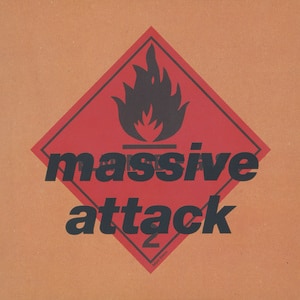
Massive Attack - Blue Lines. LP · Electronic · 1991. Sold out at Kilmorna in Listowel; format, release and availability details remain online.
LP · Electronic · 1991
Sold out at Kilmorna Collection, retained online as part of the catalogue archive.
Blue Lines is the 1991 debut that turned Bristol's sound-system culture, soul scholarship, hip-hop pacing, reggae bass weight, and late-night club atmosphere into a new kind of album language. Massive Attack emerged from the Wild Bunch circle with a record that moves deliberately rather than aggressively, letting voices, breaks, and space do the emotional work. Shara Nelson's performances give the album its most direct soul charge, while 3D, Daddy G, and Mushroom shape a world of murmured raps, slow pressure, and cinematic restraint. The era context is crucial: British dance music was accelerating, rave culture was exploding, and hip-hop sampling was changing pop's relationship to the past. Blue Lines answered with a slower pulse, making introspection, bass, and atmosphere feel radical. Unfinished Sympathy became the obvious landmark, but the whole album carries the feeling of a city inventing a vocabulary for mood, memory, and low-lit movement.
It matters because Blue Lines helped define the conditions for trip-hop before the term became shorthand. Its 1991 blend of soul, dub, rap, and club production gave British music a different center of gravity: slower, more spacious, and emotionally heavy without becoming static.
On vinyl, Blue Lines is a foundational Bristol record and one of the key early-1990s albums for anyone tracing how dance culture entered album listening. It is not just a singles vehicle; the sequencing is part of the experience, with bass, silence, and vocal contrast giving the record its lasting power.
Slow-burn Bristol soul with dubwise bass, sampled breaks, hushed rap cadences, string drama, smoky keyboards, and spacious production built around tension rather than speed.
Recommended for: Listeners exploring the roots of trip-hop and Bristol sound; Fans of slow, bass-heavy records with soul and hip-hop DNA; Collectors building a 1990s British electronic music shelf.
Why is Blue Lines considered so important? It crystallized a slower, mood-driven blend of soul, dub, hip-hop, and club production that shaped a major branch of 1990s British music. Is Unfinished Sympathy representative of the whole album? It captures the album's emotional reach, but the full record is more shadowed and varied, moving through rap-led, dub-heavy, and soul-centered passages. Does Blue Lines still sound like a debut? It has the freshness of a debut, but its control of space, pacing, and atmosphere makes it feel unusually complete for a first album.