Vinyl Record
Wu-Tang Clan - Enter the Wu-Tang (36 Chambers)
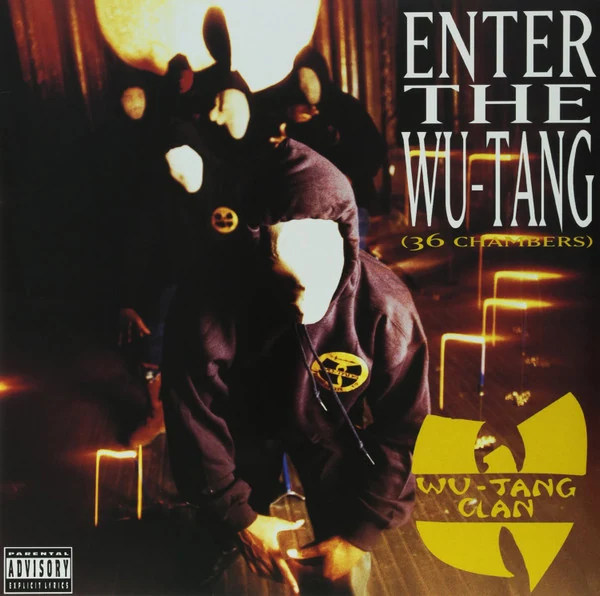
Wu-Tang Clan - Enter the Wu-Tang (36 Chambers). LP · 2016. Sold out at Kilmorna in Listowel; format, release and availability details remain online.
LP · 2016 · Loud / RCA
Sold out at Kilmorna Collection, retained online as part of the catalogue archive.
Enter the Wu-Tang (36 Chambers) is the seismic debut album from New York collective Wu-Tang Clan, a record that reshaped 1990s hip-hop with its grimy production, crew-based energy, and obsessive love of kung-fu mythology. Across these twelve tracks, RZA’s stark, sample-heavy beats give each MC a distinct battlefield, turning every verse into a competition and every song into a cipher captured on tape. This edition presents the classic album in its full sequence, from the opening blast of “Bring Da Ruckus” and the confrontational swagger of “Shame On A Nigga” through to “Da Mystery Of Chessboxin’,” “Method Man,” and the timeless street parable “C.R.E.A.M.” Every cut feels interconnected, building a dense world of Staten Island slang, rivalries, and raw storytelling. Decades after its original appearance, the record still sounds fiercely contemporary, partly because so many later artists took cues from its lo-fi grit and ensemble structure. For listeners approaching the album today, this is both a document of early ’90s New York and a self-contained universe, where skits, interludes, and overlapping voices create the sense of a crew plotting its takeover in real time.
This album is widely regarded as one of the defining works of East Coast hip-hop, a benchmark for how a group could function as a loose collective without sacrificing identity or cohesion. Its stark sonics and densely packed verses opened the door for more rugged, unpolished approaches to rap production, at a time when much of the mainstream leaned toward smoother sounds. For a serious collection, Enter the Wu-Tang (36 Chambers) fills the role of both cornerstone and reference point: a debut that introduced multiple future solo stars, influenced entire scenes on both sides of the Atlantic, and continues to be cited by new generations of artists as a formative text.
For collectors, this edition offers a way to experience the album in the format that best matches its analog-era origins, with the side breaks emphasizing the Shaolin and Wu-Tang conceptual split running through the track list. It captures the tension and atmosphere of a crew recording in close quarters, with little separation between songs, skits, and studio chatter. Even for those who already know the album digitally, having a dedicated copy on the shelf anchors a hip-hop collection. The record’s influence, recognisable track titles, and enduring reputation make it a frequent centerpiece when curating or showcasing a rap-focused selection.
The sound is raw, bass-heavy, and claustrophobic, with dusty drums, chopped soul fragments, and crowded vocal performances that feel like they were captured in a small, overworked studio.
Recommended for: Listeners building a core canon of 1990s East Coast hip-hop albums; Fans of gritty, sample-based production who want to trace modern rap’s lineage; Collectors focusing on influential debut albums from major rap artists; Newcomers to Wu-Tang Clan looking for a definitive starting point; DJs and selectors who incorporate classic hip-hop in vinyl-based sets.
Is this release the original 1990s edition of Enter the Wu-Tang (36 Chambers)? No, this copy corresponds to a later reissue of the album, presenting the original track sequence and audio in a more recent edition. Does this album include the well-known tracks associated with the Wu-Tang debut? Yes, it features core songs such as “Bring Da Ruckus,” “Da Mystery Of Chessboxin’,” “C.R.E.A.M.,” “Method Man,” and “Tearz,” as part of the complete album sequence. Who is this album most suitable for within a broader music collection? It suits listeners interested in cornerstone hip-hop records, fans of ensemble rap crews, and collectors who want a historically important, era-defining album represented in their library.