Eamon Blog
Today's Shelf Pull: Miles Davis, Tutu
A spare trumpet voice inside a carefully built electric world

Miles Davis’s Tutu sets spare trumpet lines against bright synthesizers, programmed rhythm and deep bass. Read the full story from Kilmorna in Listowel.
Miles Davis’s Tutu makes a useful distinction between a full arrangement and a crowded one. Bright synthesizers, programmed rhythm and deep bass give the music a substantial frame, yet the trumpet remains spare. There is plenty here, but nobody needs another cupboard.
For today’s vinyl shelf pull in Listowel, that contrast is the way into the record. Rather than waiting for Davis to fill every opening, listen to the shape of the openings themselves. His sharply focused lines give the surrounding construction a human scale.
Released in 1986, Tutu was his Warner Records debut. Its electric setting is not something to look past in search of the real Miles Davis. The relationship between that setting and his individual phrasing is the album’s business.
The synthesizers and programmed rhythm establish a distinctly mid-1980s vocabulary. Treating those sounds merely as a date stamp misses their purpose here. Their brightness and definition give the trumpet something clear to work against.
Marcus Miller is central to that construction: composition, production, bass and electronic arrangements all form part of his contribution. He produced most of the album. That matters because the setting deserves attention in its own right, not merely as accompaniment waiting politely behind a soloist.
Try separating the layers in your attention. Follow the programmed rhythm first, then the weight of the bass, then the brightness of the synthesizers. Returning to the trumpet after that small exercise makes its economy easier to appreciate. Fewer notes need not mean less presence.
The contrast is between a precisely constructed environment and a recognisable way of phrasing. Davis does not need to erase the machinery to remain himself. Listen for how a short line draws your ear within an arrangement that already has plenty to say.
That is a useful approach to the title track, too. Resist making the trumpet the only object of attention. Hearing the surrounding parts as a structure, rather than a backdrop, changes what you notice about its place in the music.
Side A moves through Tutu, Tomaas, Portia and Splatch. Keep that sequence intact for a first listen rather than treating the title track as the whole argument. Four titles offer a manageable stretch in which to follow the relationship between trumpet and arrangement.
Portia and Splatch are useful places to keep the same listening question alive: what holds your attention when the trumpet leaves room around itself? Let the bass and electronic textures count as musical information, rather than scenery. The framework is part of the conversation.
Side B runs from Backyard Ritual through Perfect Way and Don't Lose Your Mind to Full Nelson. With that closing track, return your attention to Davis’s phrasing inside the electric setting. The album gives you eight opportunities to consider the same productive relationship.
Turning the record over provides a practical pause in that exercise. Start the second side with your attention on the bass rather than the lead voice. It is a small adjustment, not homework, and requires no special equipment beyond your ears.
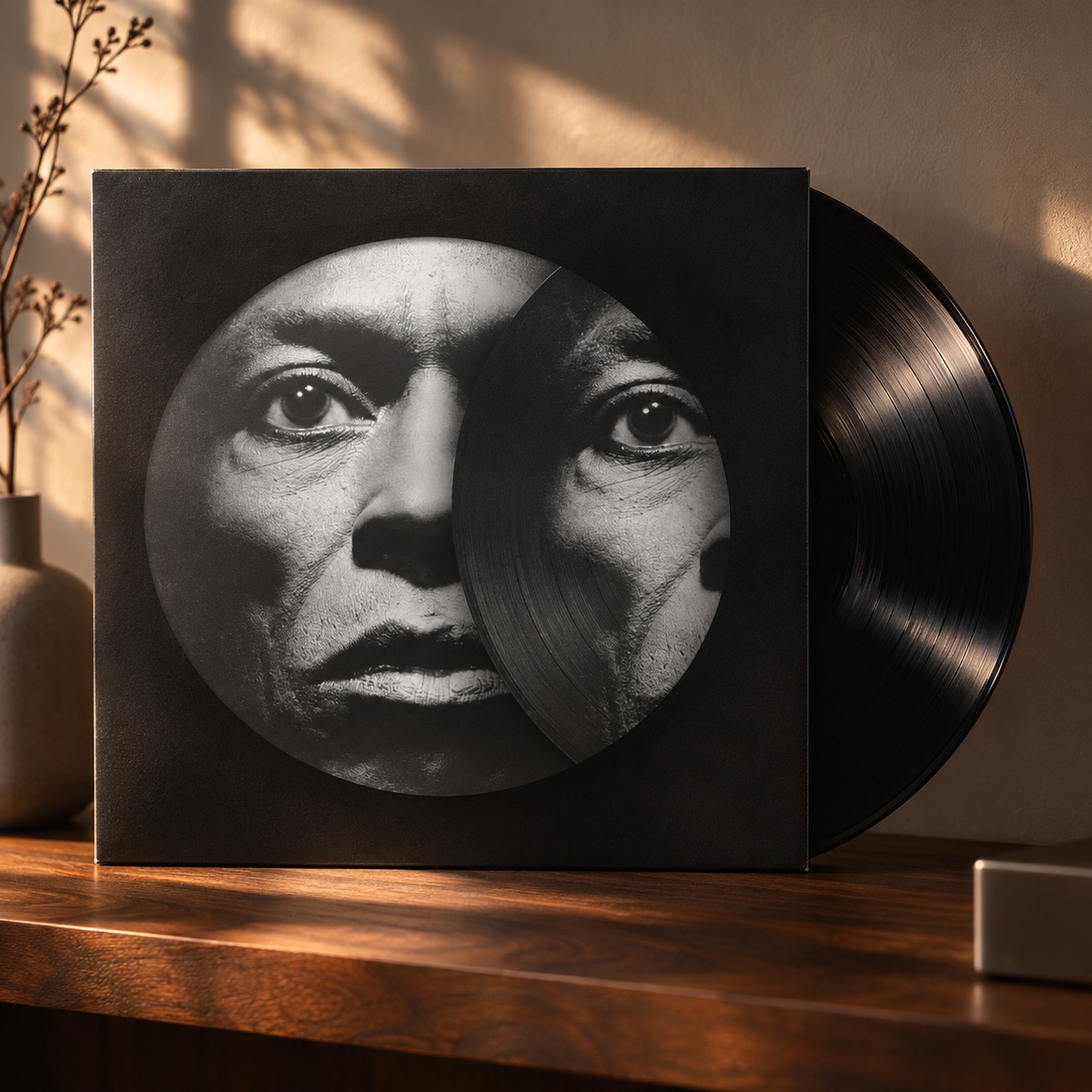
This limited 2026 picture disc belongs to the Miles Davis centennial programme. It places Irving Penn’s portrait on the record itself and keeps the original eight-track sequence on one LP. The visual presentation is distinctive; the listening argument remains the album’s own.
The picture disc gives the eye something definite to settle on. The music asks for a less fixed kind of attention: sometimes the trumpet, sometimes the bass beneath it, sometimes the constructed space between them.
There is no need to choose between admiring the arrangements and listening for Davis. Tutu makes that division feel unhelpful. Its interest lies in hearing an unmistakable voice work within a very particular musical frame.
That is the reason to spend time with this record today. Let the electronic detail register, then notice how little the trumpet needs to add. Precision can leave room for personality. Here, that room is worth attending to.
On the shelf today:
Miles Davis - Tutu
LP, 1986
Jazz
EUR 45.95
Available from The Kilmorna Collection, Listowel
Buy or reserve: https://www.thekilmornacollection.com/vinyl/miles-davis-tutu
Buying vinyl records in Ireland: https://www.thekilmornacollection.com/vinyl-records-ireland